Mitsubishi G4M Betty Bomber
7.3518°N 151.8784°E · wreck
Mitsubishi G4M Betty Bomber
A near-intact Japanese twin-engine bomber resting in just 15 meters of water off Eten Island — one of Chuuk Lagoon’s easiest and most rewarding aircraft dives.
Overview
This Mitsubishi G4M “Betty” medium bomber lies just off the end of the runway on Eten Island, where it likely crashed during a failed takeoff. The Betty was the Imperial Japanese Navy’s primary land-based bomber throughout the Pacific War — a long-range, twin-engine aircraft notorious among its crews for its vulnerability to enemy fire due to unprotected fuel tanks.
The fuselage is nearly intact and large enough to be entered from either the front or the rear gunner’s position. The two radial engines have separated from the wings and lie approximately 75 meters closer to the island. The aircraft rests on a sandy bottom at only 15 meters, making this an easy shallow dive accessible to divers of all experience levels. The combination of historical significance, good condition, and shallow depth makes the Betty Bomber an ideal first wreck dive in Chuuk or a relaxing second dive of the day.
Site Information
- Location: Off Eten Island, Chuuk Lagoon, Chuuk State, Micronesia
- Entry Type: Boat dive
- Site Type: Wreck dive
- Difficulty Level: Beginner
- Maximum Depth: 15 meters
- Typical Visibility: 15-30 meters (50-100 feet)
- Current: Generally mild inside the lagoon
- Best Time: Year-round; December to April offers calmest conditions
Marine Life
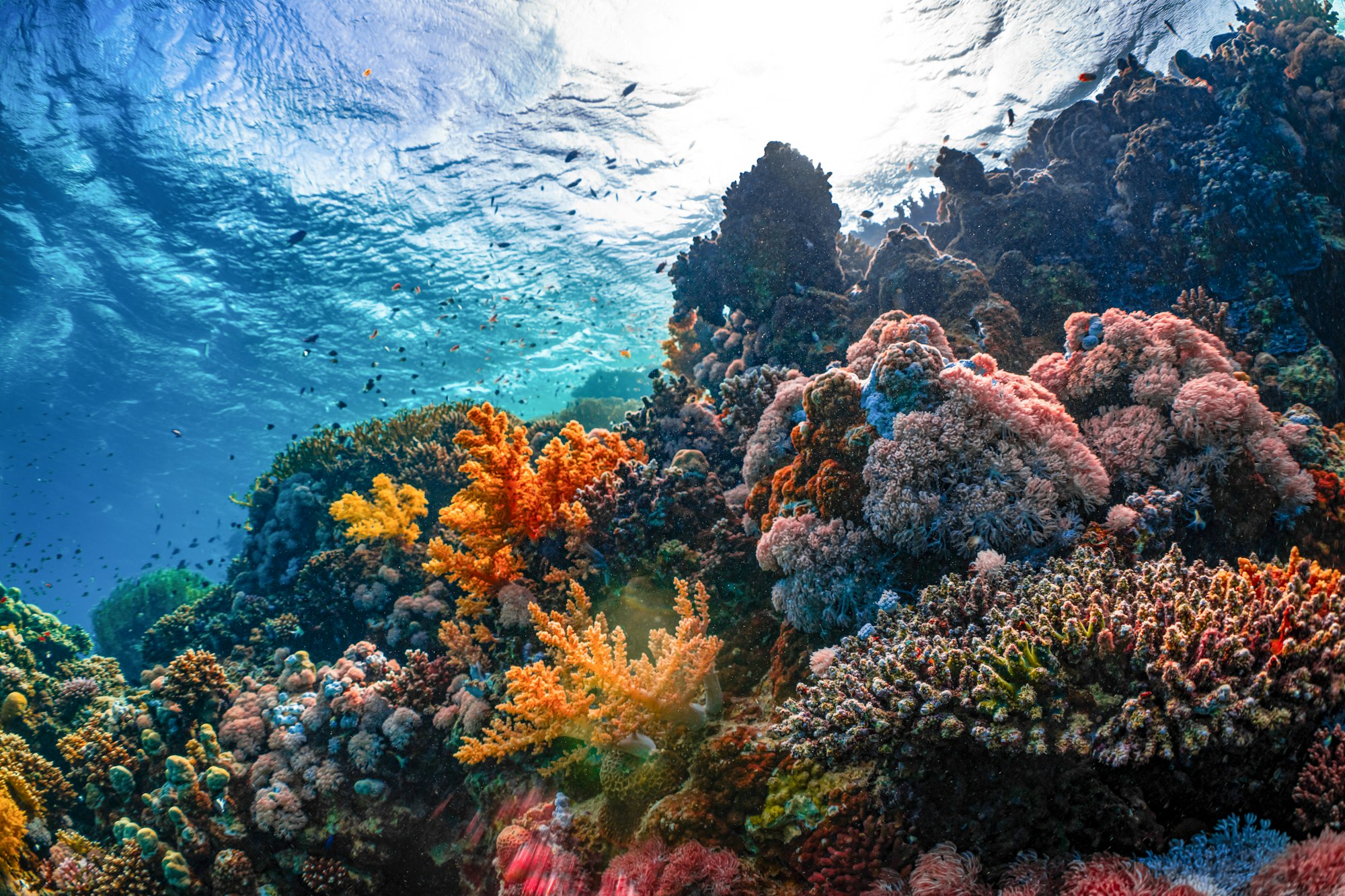
The Betty Bomber has been colonized by corals and sponges over more than eight decades on the lagoon floor. Hard and soft corals encrust the wings and fuselage, with small sea fans growing from protruding surfaces. The aircraft provides shelter for schools of glassy sweepers inside the fuselage, along with lionfish and scorpionfish that lurk in the shadows. Anemones with resident clownfish are found on the surrounding sand and along the wing surfaces. The sandy bottom around the wreck hosts garden eels and occasional stingrays.
Dive Profile
Descend to the aircraft at 15 meters. The fuselage is the main feature — it can be entered from the front cockpit area or through the rear gunner’s position, allowing a swim-through of the interior. Explore the wing structure and the fuselage exterior, noting the gun positions and cockpit layout. The two separated engines lie approximately 75 meters closer to Eten Island and can be visited on the same dive with plenty of bottom time available at this depth. The shallow depth allows extended bottom times on air, making this an excellent site for thorough exploration and photography.
Entry and Exit
Access is by dive boat from Weno-based operators, with a short ride to Eten Island. Entry is by giant stride into calm lagoon water. Descend to the wreck on the sandy bottom. The shallow depth and calm conditions make surface navigation straightforward. Surface near the boat or deploy an SMB for pickup.
Tips and Recommendations
- An excellent first dive in Chuuk for newly arrived divers to orient themselves to lagoon conditions
- Ideal as a second or third dive of the day when deeper wrecks have consumed bottom time on earlier dives
- The fuselage swim-through is spacious and well-lit — suitable for divers without formal wreck penetration training
- Visit the separated engines 75 meters toward the island for the complete picture of the aircraft
- The shallow depth and extended bottom time make this one of the best sites in Chuuk for unhurried photography
- Consider combining with the nearby Emily Flying Boat for a full morning of aircraft dives
Safety Considerations
This is one of Chuuk’s most accessible wreck dives. The shallow depth of 15 meters allows generous bottom times and eliminates decompression concerns for recreational divers. The fuselage swim-through is short, well-lit from multiple openings, and does not present a serious entrapment risk, though divers should still maintain awareness of their exit point. Maintain proper buoyancy to avoid disturbing the sandy bottom, which can reduce visibility quickly. The wreck is a war artifact — removing any items is strictly illegal under Chuuk State law.
Photography
The Betty Bomber is an outstanding photography subject at a forgiving depth. The nearly intact fuselage can be captured in a single wide-angle frame, and the abundant ambient light at 15 meters allows natural-light shooting that brings out the coral encrustation in full color. Interior shots through the fuselage with a diver silhouetted at the far opening are classic compositions. The separated engines make interesting standalone subjects. Macro opportunities include nudibranchs on the wing surfaces and coral polyps along the fuselage.
Sources: Michael McFadyen’s Scuba Diving - Betty Bomber, Dirty Dozen Expeditions - Wrecks Above 40m, Scuba Diving Earth - Truk Lagoon Wrecks. Last updated 2026-05-22.
Sea-surface temperature and wave height from Open-Meteo Marine (ERA5 reanalysis, monthly averages).
1716 verified species observations (173 species) logged within ~11 km of this site between 1956 and 2014, from the Ocean Biodiversity Information System.
- Ctenochaetus striatus · Small-bodied acanthurid
- Scaridae · Small-bodied parrotfish
- Chlorurus sordidus · Small-bodied parrotfish
- Hipposcarus longiceps · Large-bodied parrotfish
- Chlorurus bleekeri · Small-bodied parrotfish
- Scarus psittacus · Small-bodied parrotfish
- Chordata
- Scarus dimidiatus · Small-bodied parrotfish
- Siganus doliatus · Rabbitfish
- Scarus rivulatus · Small-bodied parrotfish
- Monotaxis grandoculis · Large-bodied emperor
- Mulloidichthys flavolineatus · Goatfish
Scientific survey records skew toward sampled taxa (molluscs, corals) and do not reflect what you are guaranteed to see on a dive.
Source: OBIS (obis.org), aggregated Darwin Core occurrence records.
Conditions change with the tide and the season. If you have dived this site, share what it was actually like — date, visibility, current, and what you saw. Real, recent reports from divers are exactly what this guide is built to collect.
Send a conditions report ›