Momokawa Maru
7.3732°N 151.9080°E · wreck
Momokawa Maru
A 3,829-ton ice-strengthened timber transport with a dramatic 70-75 degree list — her Hold 1 rated as good as the best holds on the Fujikawa Maru and San Francisco Maru.
Overview
The Momokawa Maru was a 3,829-ton vessel originally designed as an ice-strengthened timber transport, powered by a coal-fired steam turbine. On February 18, 1944, the second day of Operation Hailstone, she was struck by a 1,000-pound bomb that sent her to the lagoon floor at 41 meters. She now rests with a dramatic 70 to 75 degree list to port, making her one of the most severely tilted wrecks in Chuuk Lagoon.
The Momokawa Maru’s holds contain an exceptional variety of military cargo. Aircraft tail sections, propeller blades, drop tanks, radial engines, trucks, and sheets of corrugated iron fill the cargo spaces. Hold 1, in particular, has been rated as comparable to the best holds on the celebrated Fujikawa Maru and San Francisco Maru — high praise given the status of those two wrecks. The extreme list creates a challenging but rewarding diving environment, with interior spaces dramatically reoriented.
Site Information
- Location: Chuuk Lagoon, Chuuk State, Micronesia
- Entry Type: Boat dive
- Site Type: Wreck dive
- Difficulty Level: Advanced
- Maximum Depth: 41 meters
- Typical Visibility: 15-30 meters (50-100 feet)
- Current: Generally mild inside the lagoon
- Best Time: Year-round; December to April offers calmest conditions
Marine Life
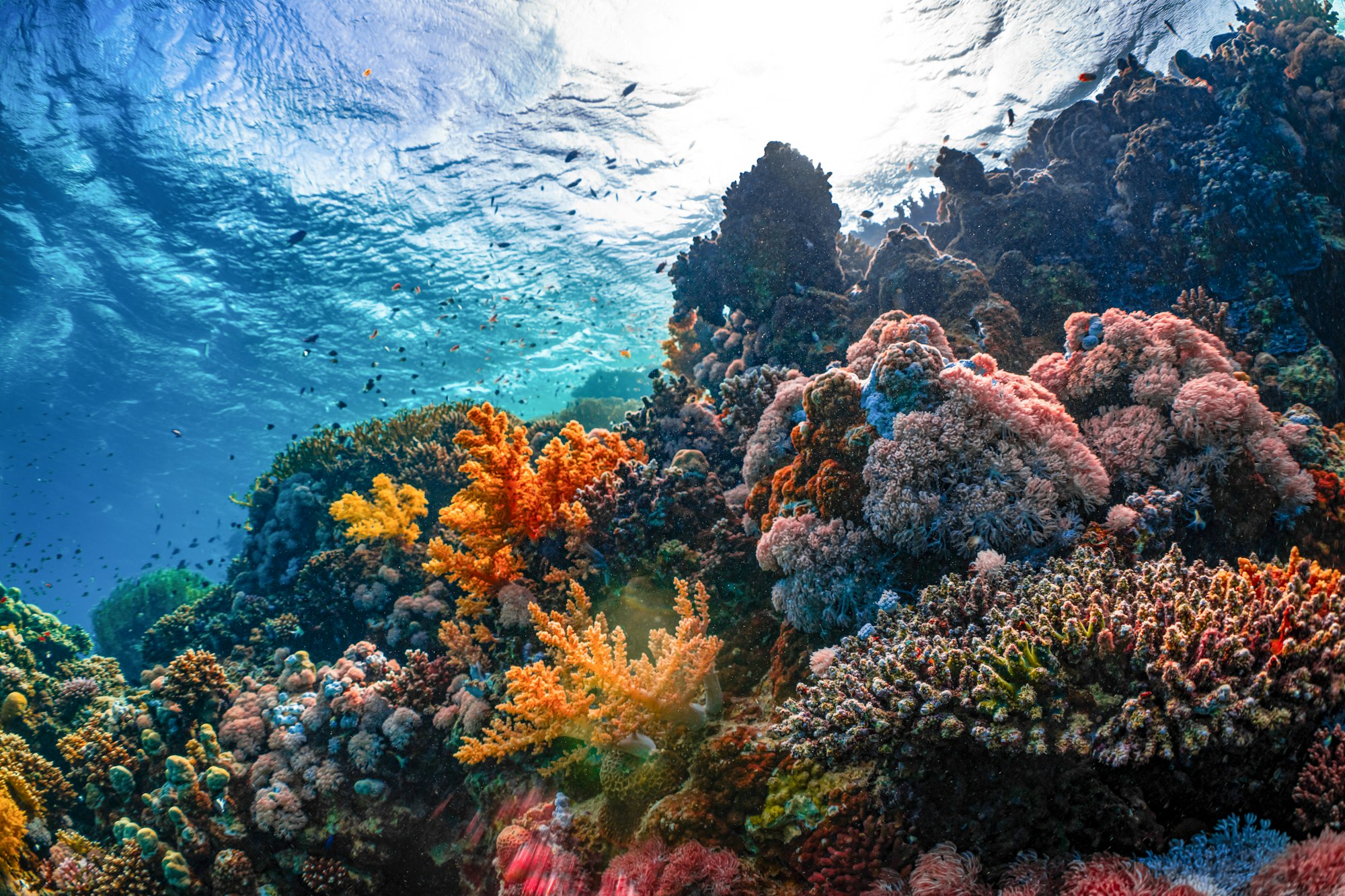
The Momokawa Maru’s exterior surfaces support coral colonization typical of Chuuk’s mid-depth wrecks. Hard and soft corals, sea fans, and sponges encrust the exposed hull and superstructure. The extreme list has created sheltered pockets and overhangs along the port side that provide habitat for lionfish, scorpionfish, and schools of glassy sweepers. Fusiliers and jacks are seen in the surrounding water column.
Dive Profile
The extreme 70-75 degree list to port dominates the dive experience on the Momokawa Maru. The near-vertical decks make conventional wreck navigation impossible — divers must adapt to moving through spaces that are rotated almost onto their sides. Hold 1 is the primary destination, containing aircraft tail sections, propeller blades, drop tanks, and radial engines in a concentration that rivals the finest cargo wrecks in the lagoon. The other holds contain trucks and corrugated iron sheets. The deck and superstructure can be explored along the starboard (upper) side. At 41 meters maximum depth, bottom time is limited and should be carefully allocated between Hold 1 and the remaining features.
Entry and Exit
Access is by dive boat from Weno-based operators. Entry is by giant stride. Descend along the mooring line to the wreck. The extreme list is immediately apparent on arrival. Surface at the mooring line or deploy an SMB. Lagoon conditions are generally calm at the surface.
Tips and Recommendations
- Prioritize Hold 1 — it contains the finest cargo and is rated alongside the best holds in Chuuk
- The 70-75 degree list makes interior navigation extremely disorienting; maintain constant awareness of your orientation and exit routes
- The coal-fired steam turbine propulsion is unusual among Chuuk’s wrecks and the engine room is worth exploring if time and training permit
- Carry primary and backup torches; the extreme list means most interior spaces receive little ambient light
- Nitrox is recommended to maximize useful bottom time at 41 meters
- Multiple dives are needed to appreciate the full range of cargo across all holds
Safety Considerations
The Momokawa Maru is a war grave — removing any artifacts is strictly illegal under Chuuk State law. The extreme 70-75 degree list is the primary hazard on this wreck. Decks are essentially vertical walls, and interior spaces are rotated to the point where navigation becomes seriously disorienting. Hold penetration requires wreck training, redundant lights, and exceptional spatial awareness. The cargo includes heavy items (trucks, radial engines) that have shifted with the list and may be unstable. Silt disturbance is amplified by the extreme angle, as fins contact surfaces that would normally be out of reach. At 41 meters, mandatory decompression may be required on longer profiles.
Photography
The Momokawa Maru’s extreme list creates dramatic photographic compositions unlike most other wrecks. The near-vertical decks and reoriented hold interiors produce disorienting, powerful images. The cargo in Hold 1 — aircraft tail sections, propeller blades, drop tanks, radial engines — provides rich subject matter that ranks with the best in Chuuk. Strobes are essential at 41 meters. The extreme angle means careful strobe positioning is needed to avoid backscatter from silt that collects on the now-horizontal port-side surfaces.
Sources: Michael McFadyen’s Scuba Diving - Momokawa Maru, Dirty Dozen Expeditions - Wrecks Above 40m, Scuba Diving Earth - Truk Lagoon Deep Wrecks. Last updated 2026-05-22.
Sea-surface temperature and wave height from Open-Meteo Marine (ERA5 reanalysis, monthly averages).
1870 verified species observations (164 species) logged within ~11 km of this site between 1949 and 2014, from the Ocean Biodiversity Information System.
- Ctenochaetus striatus · Small-bodied acanthurid
- Scaridae · Small-bodied parrotfish
- Chlorurus sordidus · Small-bodied parrotfish
- Chlorurus bleekeri · Small-bodied parrotfish
- Scarus psittacus · Small-bodied parrotfish
- Siganus doliatus · Rabbitfish
- Hipposcarus longiceps · Large-bodied parrotfish
- Monotaxis grandoculis · Large-bodied emperor
- Scarus globiceps · Small-bodied parrotfish
- Scarus rivulatus · Small-bodied parrotfish
- Chordata
- Siganus vulpinus · Rabbitfish
Scientific survey records skew toward sampled taxa (molluscs, corals) and do not reflect what you are guaranteed to see on a dive.
Source: OBIS (obis.org), aggregated Darwin Core occurrence records.
Conditions change with the tide and the season. If you have dived this site, share what it was actually like — date, visibility, current, and what you saw. Real, recent reports from divers are exactly what this guide is built to collect.
Send a conditions report ›