Nippo Maru
7.3826°N 151.9103°E · wreck
Nippo Maru
One of the best wreck dives in Chuuk Lagoon — a 107-meter transport carrying American-made field artillery on deck, a tank, and an extraordinary variety of military cargo in her holds.
Overview
The Nippo Maru was a 3,764-ton transport vessel, 107 meters (354 ft) long, launched by Kawasaki Dockyard in September 1936. She was sunk on February 17, 1944, the first day of Operation Hailstone, by three 500-pound bombs dropped by TBF Avenger aircraft from U.S. carriers. She is widely regarded as one of the best wreck dives in Chuuk Lagoon, combining accessible depth, intact structure, and a stunning array of military cargo that spans multiple holds and the open deck.
What sets the Nippo Maru apart is the variety and visibility of her cargo. Three American-made field howitzers on wheeled carriages sit on the open deck near Hold 4 — clearly visible without any penetration. The holds contain gun barrels, turrets, breeches, batteries, aluminum water containers, collapsible bicycles, gas masks, bottles, and cement bags. A Type-95 Ha-Go (or Ke-Go) light tank sits on the main deck near Hold 2, resting at approximately 40 meters. Sources conflict on the exact tank model (some say Type 97); at minimum two sources (Dive3D, Michael McFadyen) identify it as the same type as those on the San Francisco Maru. The bridge sits at 27—28 meters, making the superstructure relatively accessible, while the maximum depth reaches 48—50 meters on the lagoon floor.
Site Information
- Location: Chuuk Lagoon, Chuuk State, Micronesia
- Entry Type: Boat dive
- Site Type: Wreck dive
- Difficulty Level: Advanced
- Maximum Depth: 48 meters
- Typical Visibility: 15-30 meters (50-100 feet)
- Current: Generally mild inside the lagoon
- Best Time: Year-round; December to April offers calmest conditions
Marine Life
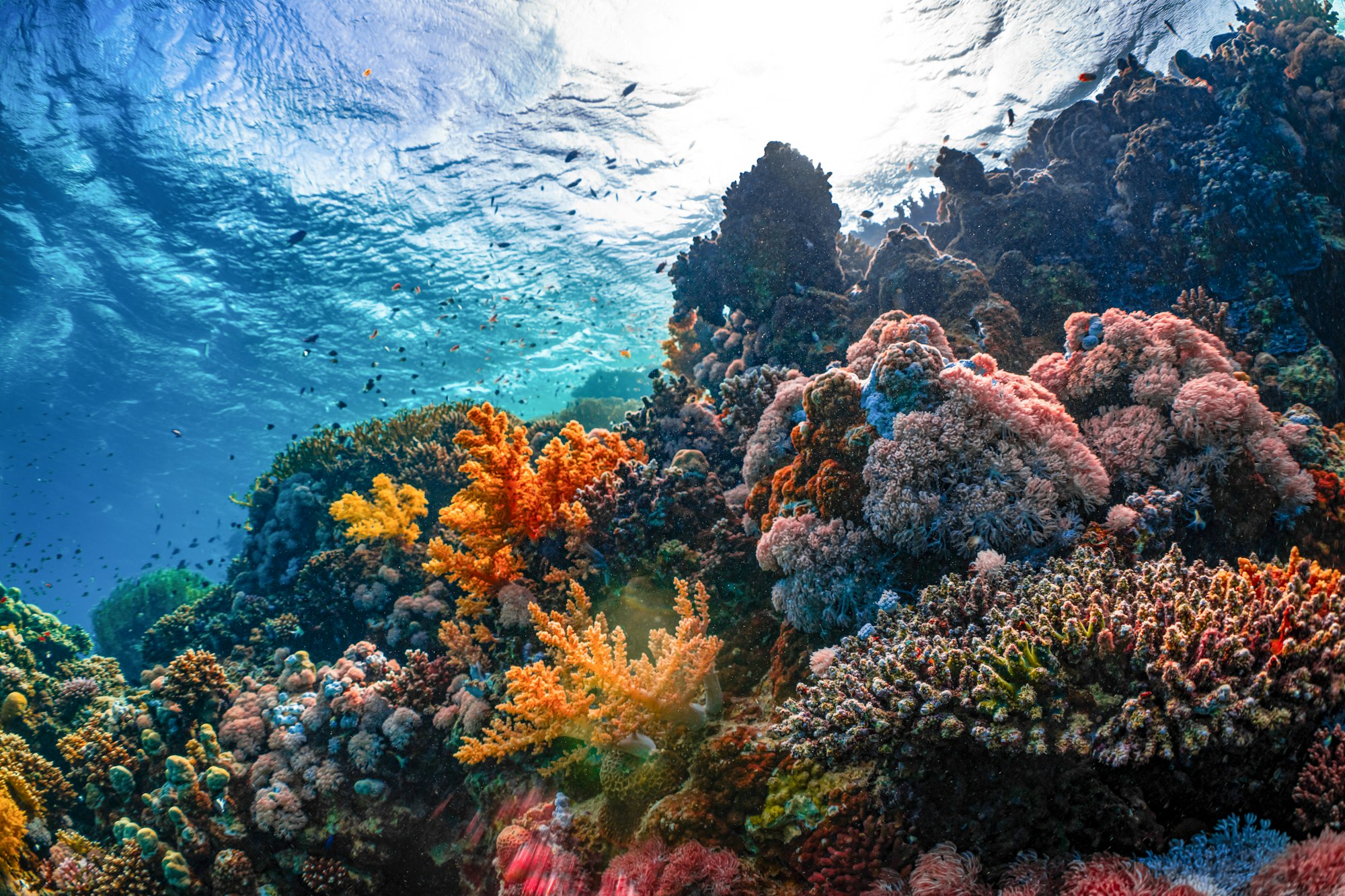
The Nippo Maru’s superstructure and cargo support extensive coral colonization. Hard and soft corals cover the masts, king posts, and railings, with sea fans growing from exposed surfaces. Schools of fusiliers and jacks patrol the mid-water around the wreck. Glassy sweepers fill the darker interior spaces of the holds, and lionfish occupy overhangs and shadowed recesses. The deck-mounted artillery pieces are partially encrusted with coral growth, creating striking combinations of military hardware and marine life.
Dive Profile
The bridge at 27—28 meters provides an excellent starting point for orientation. From the bridge, move forward to the deck where the three field howitzers are positioned in the open near Hold 4 — these are the Nippo Maru’s most iconic features and require no penetration to view. Hold 1 is particularly noteworthy, with a Type-95 Ha-Go tank on the starboard ‘tween deck. Hold 5 at approximately 48 meters contains at least eight gun barrels, gun breeches, sighting mechanisms, and large gun turrets. The tank on the main deck near Hold 2 at approximately 40 meters is a must-see subject, resting at a depth that allows more time than the deepest hold. The variety of cargo means that every hold offers something different. Plan the deepest excursions first, then work back to the bridge and deck level as bottom time runs down.
Entry and Exit
Access is by dive boat from Weno-based operators, with a 20-40 minute ride. A permanent mooring marks the site. Entry is by giant stride. Descend along the mooring line to the wreck. Surface at the mooring line or deploy an SMB. The sheltered lagoon location provides calm surface conditions.
Tips and Recommendations
- The three field howitzers on the open deck are the signature feature — allocate time to examine and photograph each one
- The tank on the main deck near Hold 2 at approximately 40 meters is a major highlight and one of the wreck’s most photogenic subjects
- Multiple dives are strongly recommended — the variety of cargo across all holds is too extensive for a single dive
- The bridge at 27—28 meters provides good bottom time and is architecturally interesting in its own right
- Carry primary and backup torches for hold exploration; the deeper holds receive limited ambient light
- Nitrox extends useful bottom time at the 27—28 meter deck level significantly
Safety Considerations
The Nippo Maru is a war grave — removing any artifacts is strictly illegal under Chuuk State law. The holds contain military ordnance including gun barrels, turrets, and breeches — do not touch or disturb any cargo. While the deck-mounted artillery is easily viewed, the deeper cargo requires hold penetration, which demands wreck training, redundant lights, and careful navigation. The maximum depth of 48 meters means the hold bottoms are in technical diving territory where mandatory decompression may be required. The ‘tween deck area of Hold 1 (where the tank sits) is an overhead environment requiring extra caution. Maintain proper trim and buoyancy to avoid disturbing silt, particularly in the enclosed hold spaces.
Photography
The Nippo Maru is one of the most photogenic wrecks in Chuuk. The three field artillery pieces sitting on the open deck are dramatic, instantly recognizable subjects that can be captured with wide-angle lenses and natural light supplemented by strobes. The tank in Hold 1 requires careful lighting but produces powerful images. The variety of cargo across the holds — from collapsible bicycles to gun turrets — provides an unusually diverse portfolio of subjects from a single wreck. The bridge at 27-28 meters receives reasonable ambient light for atmospheric compositions. Multiple dives allow a focused photographic approach to different features each time.
Sources: Michael McFadyen’s Scuba Diving - Nippo Maru, Dive3D - Nippo Maru, Master Liveaboards - Nippo Maru, Scuba Diving Earth - Nippo Maru. Correction 2026-06-16: tank location corrected from “Hold 1 starboard ‘tween deck” to “main deck near Hold 2” per Dive3D and McFadyen sources. Tank type remains consistent as Type 95 Ha-Go (or Ke-Go) per Dive3D; one source (Master Liveaboards caption) notes Type 97 but body text also references same type as San Francisco Maru — conflict noted.
Sea-surface temperature and wave height from Open-Meteo Marine (ERA5 reanalysis, monthly averages).
1892 verified species observations (165 species) logged within ~11 km of this site between 1949 and 2014, from the Ocean Biodiversity Information System.
- Ctenochaetus striatus · Small-bodied acanthurid
- Scaridae · Small-bodied parrotfish
- Chlorurus sordidus · Small-bodied parrotfish
- Chlorurus bleekeri · Small-bodied parrotfish
- Scarus psittacus · Small-bodied parrotfish
- Siganus doliatus · Rabbitfish
- Hipposcarus longiceps · Large-bodied parrotfish
- Monotaxis grandoculis · Large-bodied emperor
- Scarus globiceps · Small-bodied parrotfish
- Scarus rivulatus · Small-bodied parrotfish
- Chordata
- Siganus vulpinus · Rabbitfish
Scientific survey records skew toward sampled taxa (molluscs, corals) and do not reflect what you are guaranteed to see on a dive.
Source: OBIS (obis.org), aggregated Darwin Core occurrence records.
Conditions change with the tide and the season. If you have dived this site, share what it was actually like — date, visibility, current, and what you saw. Real, recent reports from divers are exactly what this guide is built to collect.
Send a conditions report ›