Shinkoku Maru
7.4001°N 151.7791°E · wreck
Shinkoku Maru
A 152-meter naval oiler sitting upright and largely intact — Chuuk’s most coral-encrusted wreck, with a haunting operating room and one of the Pacific’s most spectacular engine rooms.
Overview
The Shinkoku Maru was a 152-meter, 10,020-ton fleet oiler completed on December 13, 1939 by Kawasaki Dockyard in Kobe. She served as a fleet oiler for the Imperial Japanese Navy, and was among the eight oilers that refueled the Japanese strike fleet before and during the attack on Pearl Harbor in December 1941. She participated in operations across the Marshall Islands and Rabaul before being anchored in Truk Lagoon. During Operation Hailstone, on February 17, 1944, she was first struck by dive bombers from USS Yorktown amidships; on February 18 a near-miss bomb from USS Enterprise aircraft opened the hull near the engine room. She sank upright onto the lagoon floor, the keel resting at approximately 39 meters with the bridge at 11—12 meters.
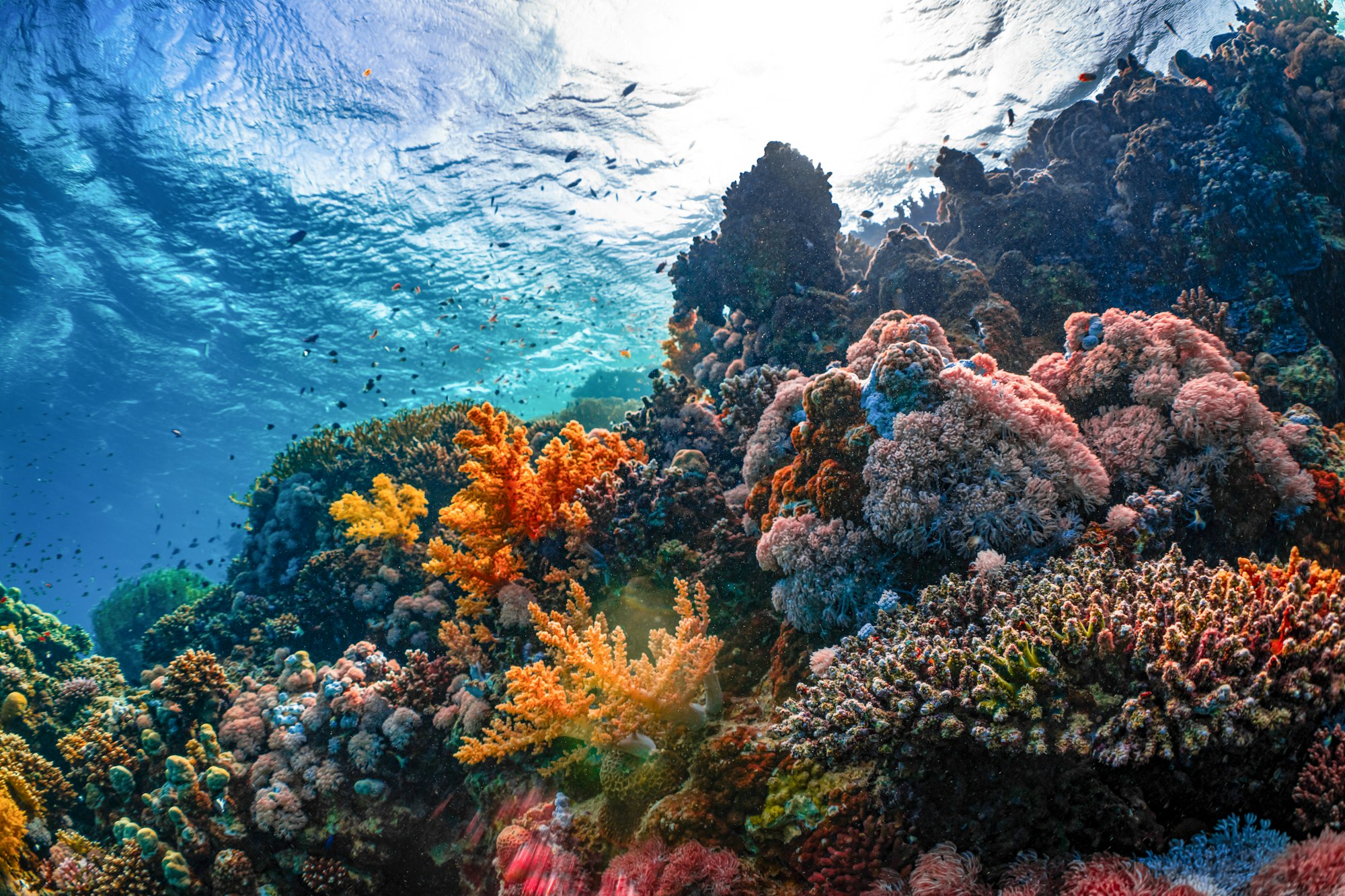
The Shinkoku Maru is widely considered the most beautiful wreck in Chuuk Lagoon due to the extraordinary density of coral growth covering nearly every surface. After more than 80 years of submersion, the masts, railings, deck machinery, and superstructure are blanketed in hard corals, soft corals, and massive sea fans. The wreck is largely intact and offers outstanding penetration opportunities, including the famous ship’s operating room with recognizable medical equipment still in place, an enormous engine room, and a bridge where the engine order telegraph remains mounted.
Site Information
- Location: Chuuk Lagoon, Chuuk State, Micronesia
- Entry Type: Boat dive
- Site Type: Wreck dive
- Difficulty Level: Intermediate
- Maximum Depth: 39 meters
- Typical Visibility: 15-30 meters (50-100 feet)
- Current: Generally mild; occasional moderate current
- Best Time: Year-round; December to April for calmest seas
Marine Life
The Shinkoku Maru carries the heaviest coral encrustation of any wreck in Chuuk. Massive table corals, staghorn formations, and enormous gorgonian sea fans cover the superstructure and masts, creating reef habitat that rivals natural coral formations. Soft corals in vivid reds, oranges, and purples festoon every railing and cable. Anemones with pairs of clownfish are found throughout.
The wreck supports dense fish populations. Large schools of batfish hover around the bridge area. Clouds of glassy sweepers fill interior spaces. Lionfish, scorpionfish, and leaf fish hide in shadowed corners. Reef sharks patrol the perimeter. Hawksbill turtles are frequently encountered resting on deck. The coral coverage is so dense that many divers describe the Shinkoku Maru as a reef dive that happens to be on a ship.
Dive Profile
Descend the mooring line to the deck level at approximately 12-15 meters amidships. The bridge superstructure is a natural starting point — the engine order telegraph on the bridge wing is a highlight, still legible after decades underwater. From the bridge, work forward or aft depending on your dive plan.
The operating room is located in the superstructure below the bridge level at approximately 20 meters. Inside, bottles, surgical instruments, and an operating table are visible, creating one of the most evocative scenes in wreck diving. The engine room is accessed through large openings amidships and descends to nearly 39 meters — it is cavernous, with twin diesel engines, catwalks, and machinery that reward experienced wreck divers with powerful torches.
For a shallower profile, stay on the upper superstructure and masts where the coral gardens are at their finest between 6-15 meters. This allows extended bottom time and makes an excellent second dive or safety stop route.
Entry and Exit
Boat dive from Weno-based operators, approximately 30-40 minutes to the site. A permanent mooring buoy is attached to the wreck. Enter by giant stride and descend the mooring line. The sheltered lagoon position means surface conditions are generally calm. Ascend via the mooring line or deploy an SMB from the mast tops during your safety stop. Coordinate with the boat captain for pickup.
Tips and Recommendations
- Bring Nitrox — the deck at 12-24 meters and engine room at 39 meters demand good gas planning, and EANx32 extends your time on the shallower sections significantly
- Dedicate a full dive to the engine room and operating room penetration, and a separate dive to the coral-covered superstructure and masts
- The operating room is small and silts up quickly — limit the number of divers entering at once and maintain perfect buoyancy
- Morning dives often have the best visibility and light penetration into the superstructure
- This wreck justifies multiple dives; many returning Chuuk visitors name it their favorite
Safety Considerations
The Shinkoku Maru is a designated war grave. Removal of any artifacts is illegal. The 39-meter maximum depth at the keel limits bottom time on air and puts less experienced divers at narcosis risk — plan accordingly and consider Nitrox. The engine room is a true overhead environment with multiple levels, narrow passages, and significant silt; it requires wreck penetration certification, redundant lights, and ideally a guide who knows the layout. The operating room is emotionally powerful — remember that crew members died aboard this vessel and treat the site with appropriate respect. Silt-outs are possible in confined spaces; maintain a continuous awareness of your exit route.
Photography
The Shinkoku Maru is arguably the most photogenic wreck in the Pacific. The coral-encrusted masts and king posts at shallow depth offer wide-angle compositions with brilliant natural light — some of the most published underwater images from Chuuk were shot here. The engine order telegraph on the bridge is a classic detail shot. Inside, the operating room provides haunting still-life subjects with bottles and instruments. The engine room rewards wide-angle work with powerful video lights to reveal its scale. Macro photographers will find nudibranchs, coral detail, and small critters throughout the exterior hull and railings.
Sources: Dive3D - Shinkoku Maru, Scuba Diving Earth - Shinkoku Maru, TracesOfWar - Shinkoku Maru, Dirty Dozen Expeditions - Wrecks Above 40m. Last updated 2026-05-22.
Sea-surface temperature and wave height from Open-Meteo Marine (ERA5 reanalysis, monthly averages).
1858 verified species observations (200 species) logged within ~11 km of this site between 1949 and 2014, from the Ocean Biodiversity Information System.
- Ctenochaetus striatus · Small-bodied acanthurid
- Scaridae · Small-bodied parrotfish
- Hipposcarus longiceps · Large-bodied parrotfish
- Chlorurus sordidus · Small-bodied parrotfish
- Chlorurus bleekeri · Small-bodied parrotfish
- Monotaxis grandoculis · Large-bodied emperor
- Scarus dimidiatus · Small-bodied parrotfish
- Siganus doliatus · Rabbitfish
- Naso annulatus · Naso other
- Lutjanus bohar · Large-bodied snapper
- Scarus rivulatus · Small-bodied parrotfish
- Chordata
Scientific survey records skew toward sampled taxa (molluscs, corals) and do not reflect what you are guaranteed to see on a dive.
Source: OBIS (obis.org), aggregated Darwin Core occurrence records.
Conditions change with the tide and the season. If you have dived this site, share what it was actually like — date, visibility, current, and what you saw. Real, recent reports from divers are exactly what this guide is built to collect.
Send a conditions report ›