Yamagiri Maru
7.3834°N 151.8215°E · wreck
Yamagiri Maru
Famous for the massive 18-inch battleship shells in Hold 4 — Type 91 armor-piercing rounds destined for Yamato or Musashi-class super-battleships, found nowhere else in the diving world.
Overview
The Yamagiri Maru was a passenger/cargo vessel built by Mitsubishi, launched May 3, 1939, and operated by the Yamashita Kisen Line. She displaced approximately 6,438—6,439 tons (sources give slightly differing figures). She was requisitioned by the Japanese Navy in September 1941. She sank during the American attacks on Truk Lagoon — a bomb hit caused a large hole in the port side amidships — and now lies on her port side in approximately 34 meters (110 ft) of water, with the starboard hull rising to approximately 15 meters below the surface.
The Yamagiri Maru is famous for one extraordinary feature: the massive armor-piercing battleship shells in Hold 5. Multiple independent sources (Argunners, SS Thorfinn, Dive3D, Scuba Diving Earth) consistently identify these as being in Hold 5. Sources describe these as approximately 45cm (18-inch) armor-piercing shells weighing approximately 3,219 lbs each — the caliber of the main guns fitted to the Yamato-class super-battleships (Yamato and Musashi), the largest battleships ever built. Each shell could be fired approximately 38 km. Seeing them jumbled in the hold is a profoundly sobering reminder of the industrial scale of the Pacific War. Note: while commonly described as “18-inch shells,” the Yamato’s guns were 46cm (18.1 inch); some sources give the shell caliber as 45cm — sources disagree on this precise figure. Whether the shells were specifically destined for Yamato or Musashi specifically is described in most sources but not cross-verified to the two-independent-source standard. Beyond this unique cargo, the wreck features a refrigerated hold and an extensive engine room.
Site Information
- Location: Chuuk Lagoon, Chuuk State, Micronesia
- Entry Type: Boat dive
- Site Type: Wreck dive
- Difficulty Level: Advanced
- Maximum Depth: 34 meters
- Typical Visibility: 15-30 meters (50-100 feet)
- Current: Generally mild inside the lagoon
- Best Time: Year-round; December to April offers calmest conditions
Marine Life
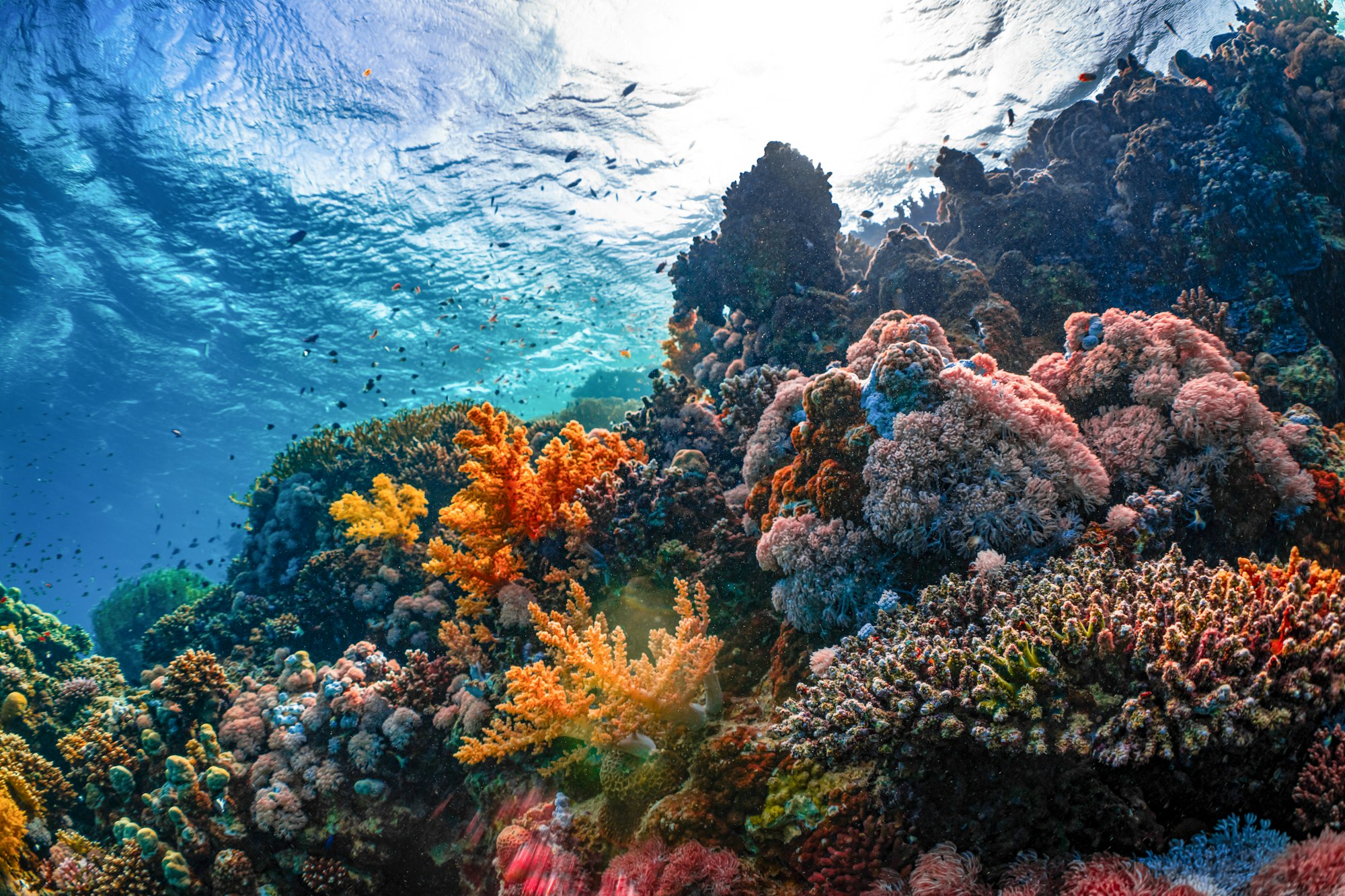
The Yamagiri Maru’s exposed starboard hull at 15 meters supports healthy coral growth in the well-lit shallows, with hard and soft corals, sea fans, and encrusting sponges. The spaces along the port side on the lagoon floor provide habitat for lionfish and scorpionfish. Schools of fusiliers and jacks patrol the mid-water around the wreck. Glassy sweepers congregate in the interior spaces, particularly in the refrigerated hold and engine room. The hull serves as an artificial reef attracting a range of reef fish.
Dive Profile
The wreck lies on her port side with the starboard hull at approximately 15 meters — this is the shallowest point and a good starting area for orientation. Hold 5 with the 18-inch battleship shells is the primary destination and should be visited while gas supply is full. The massive shells are unmistakable and deeply impressive. The large refrigerated hold offers a different interior environment worth exploring. The engine room is extensive and accessible, providing insight into the vessel’s mechanical systems. The port side rests on the lagoon floor at 34 meters. The relatively moderate maximum depth allows generous bottom time compared to Chuuk’s deeper wrecks, making it possible to explore multiple features on a single dive.
Entry and Exit
Access is by dive boat from Weno-based operators. Entry is by giant stride. Descend to the starboard hull at approximately 15 meters. Navigate along and into the wreck to reach the holds and engine room at greater depth. Surface at the mooring or deploy an SMB. The sheltered lagoon provides calm surface conditions.
Tips and Recommendations
- Hold 5 and the 18-inch battleship shells are the must-see feature — do not leave the wreck without visiting them
- The shells are unique in the diving world; there is nowhere else you can see ordnance of this caliber underwater
- The starboard hull at 15 meters provides an excellent extended safety stop area with wreck structure to explore
- The extensive engine room is worth dedicated time for those interested in marine engineering
- At 34 meters maximum depth, bottom time is more generous than on many Chuuk wrecks — take advantage of it
- Carry a torch for hold and engine room exploration; the interior of the wreck lying on its side receives limited light
Safety Considerations
The Yamagiri Maru is a war grave — removing any artifacts is strictly illegal under Chuuk State law. The 18-inch battleship shells in Hold 4 are live ordnance of extraordinary destructive potential — do not touch, stand on, or disturb them under any circumstances. The wreck lies on her port side, which disorients interior navigation; decks are now vertical surfaces and bulkheads become floors. Exercise particular caution in the engine room, which is extensive and presents multiple overhead environment challenges. Wreck penetration training, redundant lights, and a clear exit plan are essential for any interior exploration. The moderate maximum depth of 34 meters is within advanced recreational limits but gas management should still be carefully planned.
Photography
The 18-inch battleship shells in Hold 4 are the most historically significant photographic subjects on any wreck in Chuuk Lagoon. Their sheer size is difficult to convey in a single image — including a diver for scale is essential. Wide-angle lenses are necessary for the hold and engine room interiors. The starboard hull at 15 meters receives good ambient light and supports natural-light wide-angle compositions of the coral-encrusted hull surface. The large refrigerated hold and extensive engine room provide additional interior subjects. Strobes are essential for hold and engine room photography to restore color and illuminate the darker spaces.
Sources: SS Thorfinn - Yamagiri Maru, Dive3D - Yamagiri Maru, Argunners - Yamagiri Maru, Scuba Diving Earth - Yamagiri Maru, Wikipedia - Yamato-class battleship. Correction 2026-06-16: battleship shells corrected from Hold 4 to Hold 5 per 4 independent sources.
Sea-surface temperature and wave height from Open-Meteo Marine (ERA5 reanalysis, monthly averages).
2668 verified species observations (184 species) logged within ~11 km of this site between 1949 and 2014, from the Ocean Biodiversity Information System.
- Ctenochaetus striatus · Small-bodied acanthurid
- Scaridae · Small-bodied parrotfish
- Hipposcarus longiceps · Large-bodied parrotfish
- Chlorurus sordidus · Small-bodied parrotfish
- Scarus psittacus · Small-bodied parrotfish
- Chlorurus bleekeri · Small-bodied parrotfish
- Monotaxis grandoculis · Large-bodied emperor
- Siganus doliatus · Rabbitfish
- Chordata
- Scarus rivulatus · Small-bodied parrotfish
- Scarus dimidiatus · Small-bodied parrotfish
- Scarus globiceps · Small-bodied parrotfish
Scientific survey records skew toward sampled taxa (molluscs, corals) and do not reflect what you are guaranteed to see on a dive.
Source: OBIS (obis.org), aggregated Darwin Core occurrence records.
Conditions change with the tide and the season. If you have dived this site, share what it was actually like — date, visibility, current, and what you saw. Real, recent reports from divers are exactly what this guide is built to collect.
Send a conditions report ›