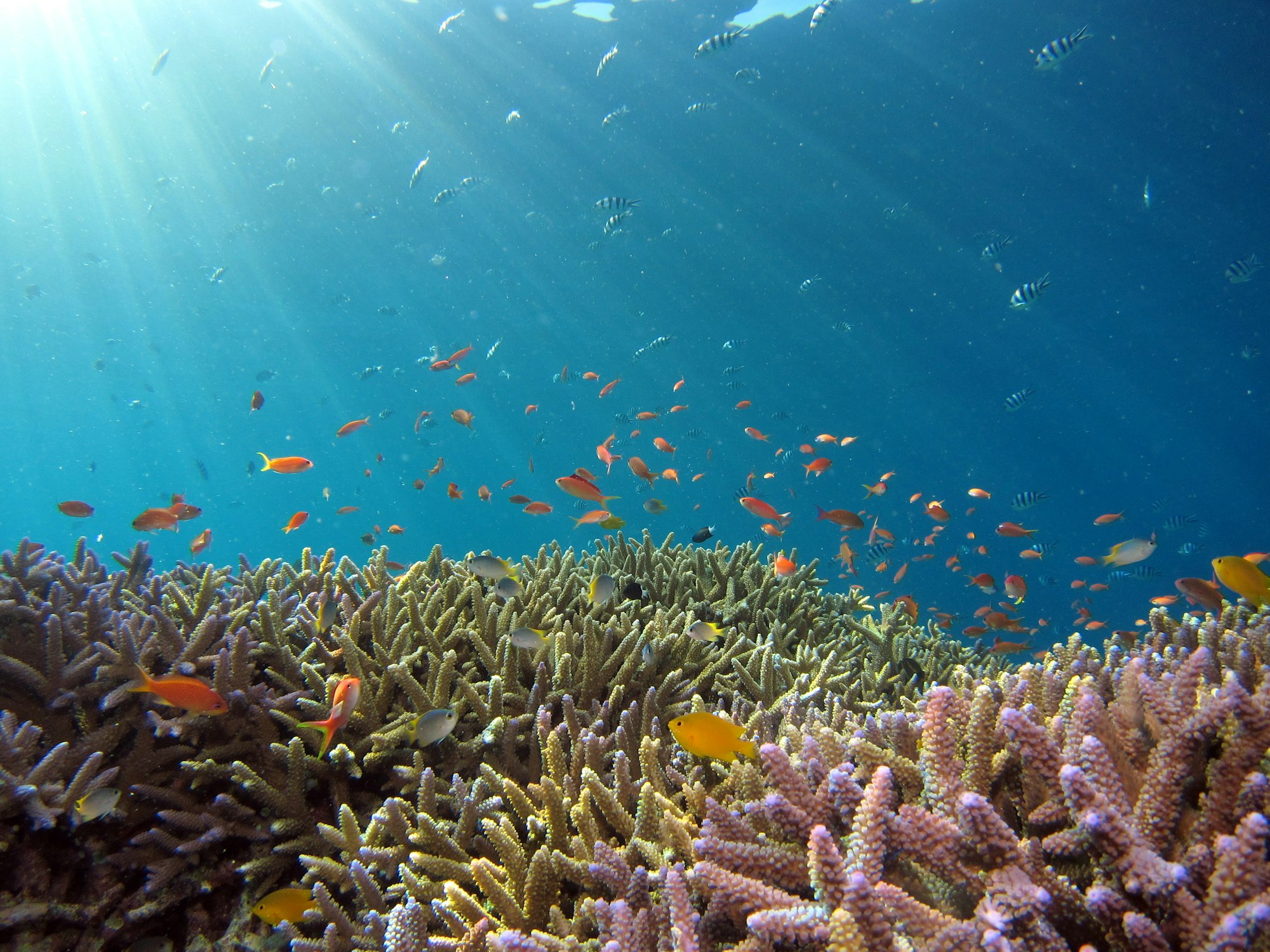
Blue Ribbon Eel Reef
16.8300°S 179.8650°E · reef
Blue Ribbon Eel Reef
A dedicated critter and macro site on Taveuni’s reef system, reliably holding blue ribbon eels, snake eels, ghost pipefish, and frogfish.
Overview
Blue Ribbon Eel Reef is a critter-focused site on Taveuni’s reef system, north of the Rainbow Reef dive area. The site is purpose-suited to slow, methodical macro exploration — a contrast to the dramatic wall and current diving that defines most Taveuni diving. At 16 meters maximum depth and in typically protected water with nil to light current, it accommodates beginner divers and provides experienced macro photographers with essentially unlimited bottom time. Dive The World’s Taveuni guide confirms the site features small coral bommies interspersed with rubble patches at 8–25 meters depth, with macro-focused marine life. Blue ribbon eels (Rhinomuraena quaesita) are reliably found in the rubble at approximately 45 feet (14 meters), according to diver reports. The Fiji travel site Fiji Travel.org describes the eels as “almost guaranteed sightings” alongside snake eels and yellow-headed ribbon eels.
Site Information
- Location: Taveuni reef system, north of Rainbow Reef, Fiji
- Entry Type: Boat dive
- Site Type: Reef
- Difficulty Level: Beginner
- Maximum Depth: 16 meters
- Typical Visibility: 15–25 meters (50–80 feet)
- Current: Nil to light
- Best Time: Year-round; dry season (May–October) for best visibility
Marine Life
Species confirmed at this site by multiple sources: blue ribbon eels (Rhinomuraena quaesita) in rubble burrows; black juvenile ribbon eels; yellow-headed ribbon eels (females); snake eels. Ghost pipefish hovering near crinoids and sea whips are reported by Dive The World’s Taveuni guide. Frogfish on sponges and leaf scorpionfish on rubble are documented. Pygmy seahorses are listed by Dive The World for Eel Reef, associated with gorgonian fans. Octopus and cuttlefish are noted. Nudibranchs of various genera throughout.
Note: The previous description included specific nudibranch genus attributions (Chromodoris, Flabellina, Hypselodoris) and Coleman shrimp on fire urchins as confirmed at this specific site. Coleman shrimp are widely present in Fiji’s rubble zones but were not confirmed in site-specific sources for this site; they remain plausible given the habitat but are not attributed here.
Dive Profile
Descend to 12–16 meters and begin a methodical search of rubble patches and coral heads. Blue ribbon eels are easiest to spot in the first 20 minutes before sediment is disturbed. Ask the guide to locate the eel burrows at the start. Spend time at each critter station, then ascend through the 8–12 meter zone looking for ghost pipefish and leaf scorpionfish. The shallowest reef (3–8 meters) provides an active safety stop zone.
Entry and Exit
Accessed by boat from Taveuni operators as part of a multi-dive day package. The calm conditions mean any standard dive boat handles the site easily. Entry is by giant stride or back roll. The shallow profile means exit is typically straightforward with good gas remaining.
Tips and Recommendations
- Ask the guide to find the eel burrows first: Experienced Taveuni guides know specific burrow locations and can take you directly to them.
- Approach blue ribbon eels very slowly: These eels retreat into their burrows at the slightest disturbance. Approach from in front, move at near-zero speed, stop at about 50cm, and hold position.
- Search near crinoids for ghost pipefish: Ornate ghost pipefish associate closely with feather stars and sea whips, matching their coloring precisely. Inspect every crinoid on the reef carefully.
- Leaf scorpionfish are easier to find at night: If the operator offers a night dive on this reef, leaf scorpionfish are more visible as they move more actively.
Safety Considerations
Blue Ribbon Eel Reef is one of Fiji’s most low-risk dive sites. The primary concern is fin-tip damage to coral from divers with poor buoyancy — the site’s macro life requires close-approach, low-altitude diving that punishes poor trim. Maintain horizontal trim throughout. Do not handle or disturb marine life. Blue ribbon eels can bite if provoked.
Photography
This site is primarily a macro site. A 100mm or 105mm macro lens handles ribbon eels at working distance (50–80cm). A wet diopter extends capability for the smallest subjects. For blue ribbon eels, a single strobe at 45° from one side reveals the electric blue coloring without harsh shadows. For ghost pipefish, front-on two-strobe lighting at equal intensity reveals their actual shape against the camouflage background.
Sources: Dive The World - Taveuni, Salt Diver Fiji - Guided Dives, Fiji Travel - Diving Rainbow Reef Taveuni. Last updated 2026-05-25.
Sea-surface temperature and wave height from Open-Meteo Marine (ERA5 reanalysis, monthly averages).
697 verified species observations (207 species) logged within ~11 km of this site between 1980 and 2003, from the Ocean Biodiversity Information System.
- Ostorhinchus nigrofasciatus
- Trimma
- Eviota sparsa
- Cheilodipterus artus
- Fowleria marmorata
- Wetmorella nigropinnata
- Nectamia savayensis
- Centropyge bispinosa
- Oxycheilinus digramma
- Pristiapogon kallopterus
- Centropyge flavissima
- Brotula multibarbata
Scientific survey records skew toward sampled taxa (molluscs, corals) and do not reflect what you are guaranteed to see on a dive.
Source: OBIS (obis.org), aggregated Darwin Core occurrence records.
Conditions change with the tide and the season. If you have dived this site, share what it was actually like — date, visibility, current, and what you saw. Real, recent reports from divers are exactly what this guide is built to collect.
Send a conditions report ›