E6
17.7747°S 177.1575°E · pinnacle
E6
A seamount rising sheer-sided from over 900 meters in the heart of the Vatu-i-Ra Channel — named for E6 film processing because photographers take so many frames here.
Overview
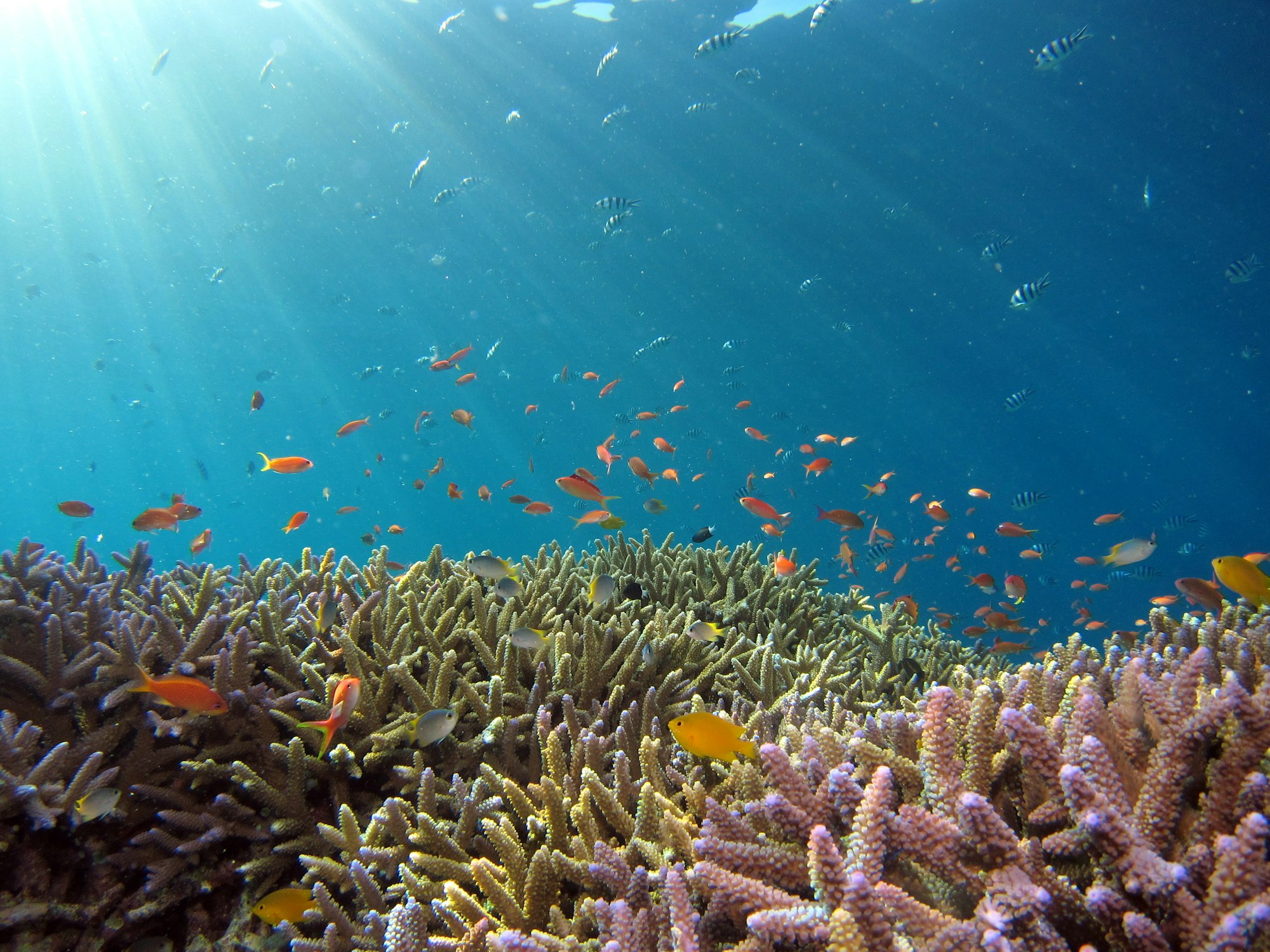
E6 is a seamount in Bligh Water’s Vatu-i-Ra Channel, between Viti Levu and Vanua Levu, rising from depths exceeding 900 meters to within less than one meter of the surface. Its position in the narrowest section of the channel means it is continuously flushed by strong tidal currents that carry nutrients from the open Pacific — and that sustained flow drives one of Fiji’s richest pelagic and soft coral ecosystems. The name references E6 film processing, reflecting the tendency for photographers to shoot far more frames here than at most other sites. The pinnacle hosts a large swim-through feature called The Cathedral, where sunlight filters through gorgonians and sponges to create dramatic light beams, and offers regular encounters with schooling barracuda, trevally, eagle rays, and occasional hammerhead sharks. E6 is a liveaboard destination or accessible from resorts on Viti Levu’s north coast — it is not associated with Beqa Lagoon or Pacific Harbour.
Site Information
- Location: Vatu-i-Ra Channel, Bligh Water, Fiji (between Viti Levu and Vanua Levu)
- Entry Type: Boat dive
- Site Type: Pinnacle/seamount
- Difficulty Level: Advanced
- Maximum Depth: 28 meters
- Typical Visibility: 15–30 meters (50–100 feet)
- Current: Moderate to strong (channel location); stronger during tidal peaks
- Best Time: May to October
Marine Life
Multiple sources confirm the following species at E6: schooling barracuda (often in large formations), bigeye trevally, surgeonfish schools, eagle rays, and occasional scalloped hammerhead sharks. Lobsters and arrowhead crabs inhabit the rocky structure. In the sheltered lee of the pinnacle, the structure is coated in delicate soft corals and gorgonian sea fans. Night dives are notable for bioluminescent flashlight fish. The Cathedral swim-through interior is lined in gorgonians and sponges with soft coral trees growing from the floor. Anthias swarm over the pinnacle’s upper structure in large numbers.
Dive Profile
Descend along the pinnacle structure from the shallows (the tip is nearly at the surface) to 25–28 meters on the deeper flanks. Locate The Cathedral swim-through and pass through — the interior is lit by filtered sunlight through the gorgonian-covered roof. Circuit the pinnacle’s outer edges, observing the channel’s pelagic action above and beside the structure. The lee side in lower current provides detailed inspection of the soft coral and gorgonian coverage. Ascend progressively back toward the pinnacle crest. Operators often run a second night dive on the same pinnacle, when flashlight fish emerge. Current direction determines which face of the pinnacle to start on.
Entry and Exit
E6 is accessible from liveaboards on the Fiji circuit (NAI’A and others) and from shore-based operators at Volivoli Beach Resort and similar Bligh Water-access properties on Viti Levu’s north coast. Mooring buoys allow boats to hold station in channel current. Entry by giant stride; surface current at the mooring is usually manageable but requires attention. In strong current, deploy an SMB and ascend along the pinnacle structure rather than free-ascending into open water.
Tips and Recommendations
- Current is your friend here: E6 is significantly better with current running — the soft corals extend and pelagic action increases. Check tidal timing with your operator.
- Watch the blue for hammerheads: Scalloped hammerheads appear from the open water above and around the pinnacle on strong-current dives. Keep scanning the blue during circuit periods.
- Plan a night dive: The E6 night dive for flashlight fish is noted by NAI’A and other liveaboard operators as one of the more unusual experiences available on the circuit.
- Do not confuse with Beqa Lagoon sites: E6 is in Bligh Water (north Fiji, Vatu-i-Ra channel), not Beqa Lagoon (south Viti Levu). These are different regions accessed from different bases.
Safety Considerations
Strong channel currents can develop rapidly around isolated seamounts as tidal conditions change. Agree on an abort depth and gas turn-around before the dive. Do not free-ascend away from the pinnacle into open-channel current. Deploy an SMB at the safety stop on every ascent — boat traffic in Bligh Water is moderate and drifting divers need to be visible.
Photography
E6 is a showcase wide-angle site. The pinnacle’s upper structure, with soft corals and schooling fish, provides layered subjects at various depths. The Cathedral swim-through rewards a wide-angle or fisheye lens pointed toward the gorgonian-filtered light from above. For barracuda and trevally schools, use fast shutter speeds (1/200 or faster) and position below the school to shoot upward against the light. Night dive photographers should use a small focus light for bioluminescent flashlight fish to avoid washing them out.
Sources: NAI’A Liveaboard - Fiji Dive Sites, Dive The World - Koro Sea & Bligh Water, Diversion Dive Travel - E6. Last updated 2026-05-25.
Sea-surface temperature and wave height from Open-Meteo Marine (ERA5 reanalysis, monthly averages).
786 verified species observations (338 species) logged within ~11 km of this site between 1958 and 2002, from the Ocean Biodiversity Information System.
- Acanthurus lineatus
- Laticauda colubrina · Yellow-lipped Sea Krait
- Engyprosopon
- Foa
- Gymnothorax chilospilus
- Bryaninops
- Gobiodon
- Synodus
- Moringua
- Eviota
- Upeneus
- Brachaluteres
Scientific survey records skew toward sampled taxa (molluscs, corals) and do not reflect what you are guaranteed to see on a dive.
Source: OBIS (obis.org), aggregated Darwin Core occurrence records.
Conditions change with the tide and the season. If you have dived this site, share what it was actually like — date, visibility, current, and what you saw. Real, recent reports from divers are exactly what this guide is built to collect.
Send a conditions report ›