Nigali Passage
17.3000°S 178.5833°E · drift
Nigali Passage
A tidal channel on remote Gau Island where grey reef sharks school by the dozen — one of Fiji’s most dramatic unbaited shark encounters.
Overview
Nigali Passage is a tidal channel on the northwestern coast of Gau Island, cutting through the barrier reef into a protected lagoon. Gau is the fifth-largest island in Fiji, remote and sparsely populated, in the Lomaiviti Group. The passage is accessible only by liveaboard. The passage itself is narrow — sources describe it as roughly 20 meters long at its tightest section, opening into the lagoon beyond — and the tidal current concentrates marine life in the channel in a way few Pacific sites match. The site has an optimal dive window of approximately three to four hours per day tied to the tidal cycle; outside this window, current exceeds 4 knots and visibility drops significantly. The signature encounter is with schooling grey reef sharks — sources report 10 to 25 individuals (primarily females and offspring according to NAI’A’s site documentation) patrolling the channel in a formation that is unusual in the Pacific. Divers drift through the passage with the incoming tide. The sharks are not baited or conditioned; they are present because the tidal current naturally concentrates fish life in the passage.
Site Information
- Location: Nigali Passage, Gau Island (northwest coast), Lomaiviti Group, Fiji
- Entry Type: Boat dive
- Site Type: Drift dive
- Difficulty Level: Advanced
- Maximum Depth: 25 meters
- Typical Visibility: 20–30 meters (65–100 feet; drops outside tidal window)
- Current: Strong tidal current (dive timed to incoming tide; 3–4 hour optimal window per day)
- Best Time: May to October; accessible year-round by liveaboard
Marine Life
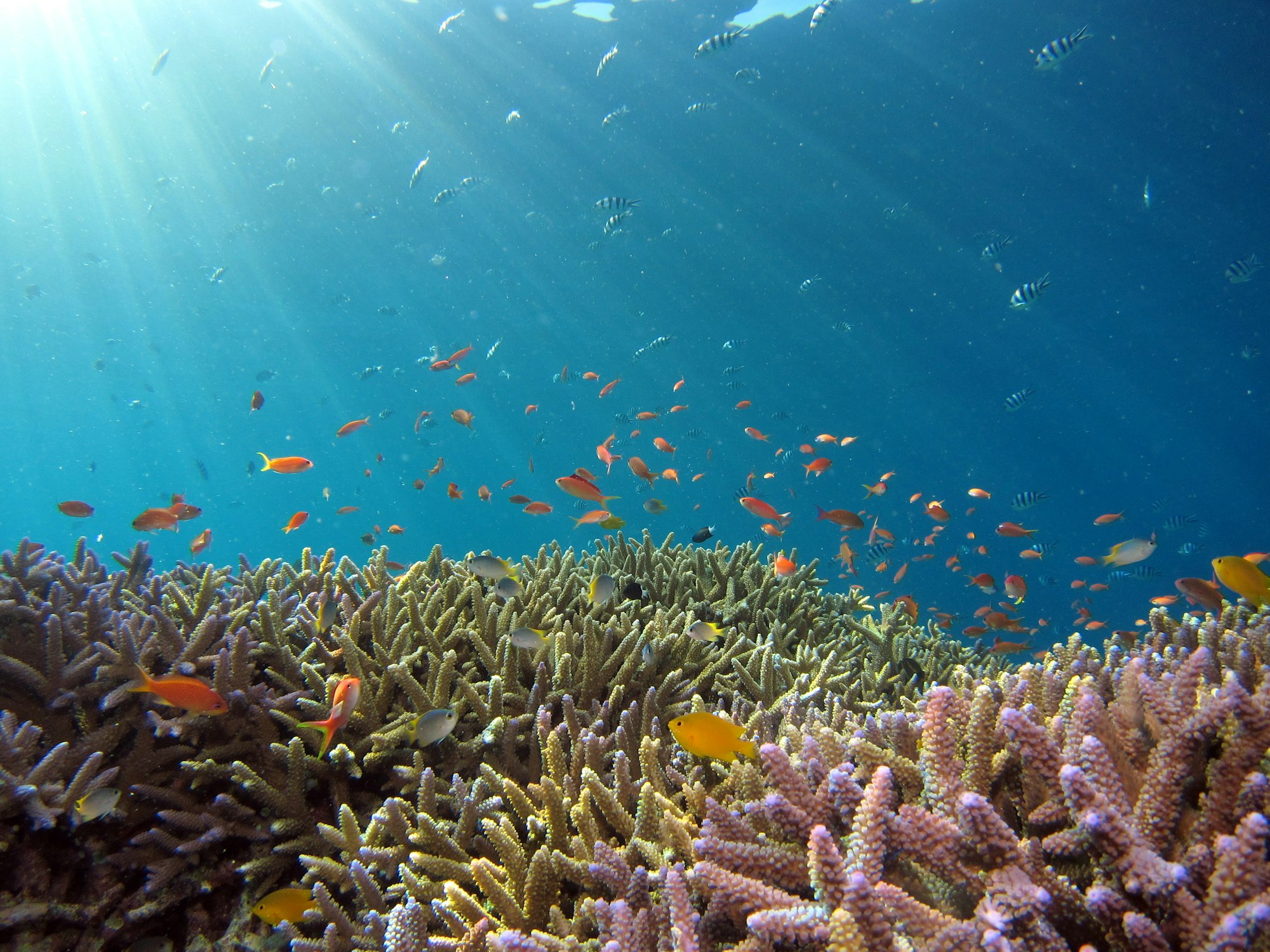
Grey reef sharks are the principal attraction — 10 to 25 individuals are consistently reported in the channel by multiple operator sources, patrolling at 15–25 meters. Unlike feeding dives, these sharks are hunting in the natural current-driven food concentration, not responding to bait. Whitetip reef sharks share the passage. Three separate age-segregated schools of barracuda have been documented in the passage by NAI’A. Malabar grouper (also known as brindle bass) are resident and visible at depth. Eagle rays and occasional manta rays pass through. Trevally schools follow the current. In the lagoon at the exit, soft corals and coral gardens provide a calm decompression environment with smaller reef fish.
Dive Profile
The liveaboard positions upstream of the passage entrance on the incoming tide. Divers enter above the reef and descend to 20–25 meters at the channel mouth — this is the primary shark viewing zone. The current carries the group through the passage and into the lagoon interior, where depth shallows to 8–12 meters and current eases. Sources describe the end of the passage opening into a “delightful cabbage patch” of coral for the final portion of the dive before collection. Total drift is variable depending on current strength. Guides position the group in the mid-water column for the best views of the sharks patrolling at depth.
Entry and Exit
Gau Island is accessible only by liveaboard — no regular day-trip service operates from any major hub to this location. Fiji liveaboard operators (principally NAI’A and several others) include Nigali Passage as a standard stop on multi-day circuits. Entry upstream is by giant stride into moving water; guides hold the group during descent. Exit is in the calmer lagoon interior, where the boat or a tender collects divers.
Tips and Recommendations
- Plan a liveaboard trip specifically for Gau: Nigali Passage cannot be reached on a day trip. Commit to a multi-day Fiji liveaboard itinerary that lists Gau on the route.
- Dive the incoming tide: The incoming tide pushes divers into the lagoon and positions the shark school at the passage mouth where visibility is optimal.
- Stay mid-water at 12–15 meters: This puts divers in position to observe the sharks patrolling below while avoiding the floor and strong bottom current.
- Remain still when sharks are close: The sharks at Nigali are not conditioned, but stationary, passive divers are less disruptive. Hold your position and let the current deliver the encounter.
- Carry a reef hook: On very strong current days, a reef hook on bare rock in the passage allows you to hold station and observe without fighting the flow.
Safety Considerations
Diving outside the tidal window is dangerous — current exceeds 4 knots and can sweep divers into rocks or separate the group. The guide’s tidal briefing is mandatory and non-negotiable. Grey reef sharks in natural schooling behavior are not aggressive, but cornering or blocking individual sharks’ movement paths can provoke a defensive response — maintain a calm, passive posture. Gau Island is remote; medical evacuation to Suva takes several hours. Dive conservatively and within your limits. Deploy an SMB before surfacing in the lagoon.
Photography
Nigali Passage offers one of the most sought-after grey reef shark photography opportunities in the Pacific. Wide-angle shooting at 10–17mm captures the schooling sharks with the channel walls as backdrop. The key composition is looking back toward the ocean through the passage mouth with sharks silhouetted against the blue. Use natural light and fast shutter speeds (1/125 or faster) to freeze shark movement. Avoid strobes on wide-angle shark shots — the animals expose well in ambient light and flash can alter their behavior.
Sources: NAI’A Liveaboard - Gau & Nigali Passage, LiveAboard.com - Nigali Passage, Dive The World - Koro Sea. Last updated 2026-05-25.
Sea-surface temperature and wave height from Open-Meteo Marine (ERA5 reanalysis, monthly averages).
112 verified species observations (79 species) logged within ~11 km of this site between 1997 and 2015, from the Ocean Biodiversity Information System.
- Pomacentridae · Damsels
- Chaetodontidae · Butterflyfish
- Pomacanthidae · Angelfish
- Pavoraja
- Mullidae · Goatfish
- Acanthuridae · Surgeon fishes
- Siganidae · Rabbitfish
- Caesionidae · Fusiliers
- Carangidae · Jacks
- Blenniidae · Blennies
- Serranidae · Groupers
- Gobiidae · Gobies
Scientific survey records skew toward sampled taxa (molluscs, corals) and do not reflect what you are guaranteed to see on a dive.
Source: OBIS (obis.org), aggregated Darwin Core occurrence records.
Conditions change with the tide and the season. If you have dived this site, share what it was actually like — date, visibility, current, and what you saw. Real, recent reports from divers are exactly what this guide is built to collect.
Send a conditions report ›