Shark Reef Marine Reserve
18.2167°S 177.9833°E · reef
Shark Reef Marine Reserve
Pacific Harbour’s legendary shark dive — up to eight species in a single session, with the action beginning at 30 meters.
Overview
Shark Reef Marine Reserve, managed by Beqa Adventure Divers in partnership with local villages, is one of the world’s most celebrated shark dives. Established in April 2004 as the first protected shark sanctuary in Fiji, it was designated Fiji’s first National Marine Park in November 2014. The site sits in Beqa Passage approximately 6 kilometers from Pacific Harbour on Viti Levu’s south coast — a 15 to 20 minute boat ride. The dive is a structured multi-level experience: divers descend to The Arena at 30 meters (100 feet), where trained feeders present tuna heads to sharks from a central feeding box positioned just beyond a low coral barricade. Divers observe from behind the barricade. After 10–12 minutes at depth, the group ascends to 10 meters for 10–15 minutes with grey reef and whitetip reef sharks, then finishes at 4 meters where blacktip and whitetip sharks are present in the shallows. Eight shark species are regularly recorded: bull, tiger, tawny nurse, silvertip, grey reef, whitetip reef, blacktip reef, and sicklefin lemon sharks. The reserve’s income supports the local village and has transformed attitudes toward shark protection across Beqa Island.
Site Information
- Location: Beqa Passage outer reef, Pacific Harbour, Viti Levu, Fiji
- Entry Type: Boat dive
- Site Type: Reef
- Difficulty Level: Advanced
- Maximum Depth: 30 meters
- Typical Visibility: 15–25 meters (50–80 feet)
- Current: Light to moderate
- Best Time: Year-round; bull sharks present on every dive; tiger sharks most frequent November–March
Marine Life
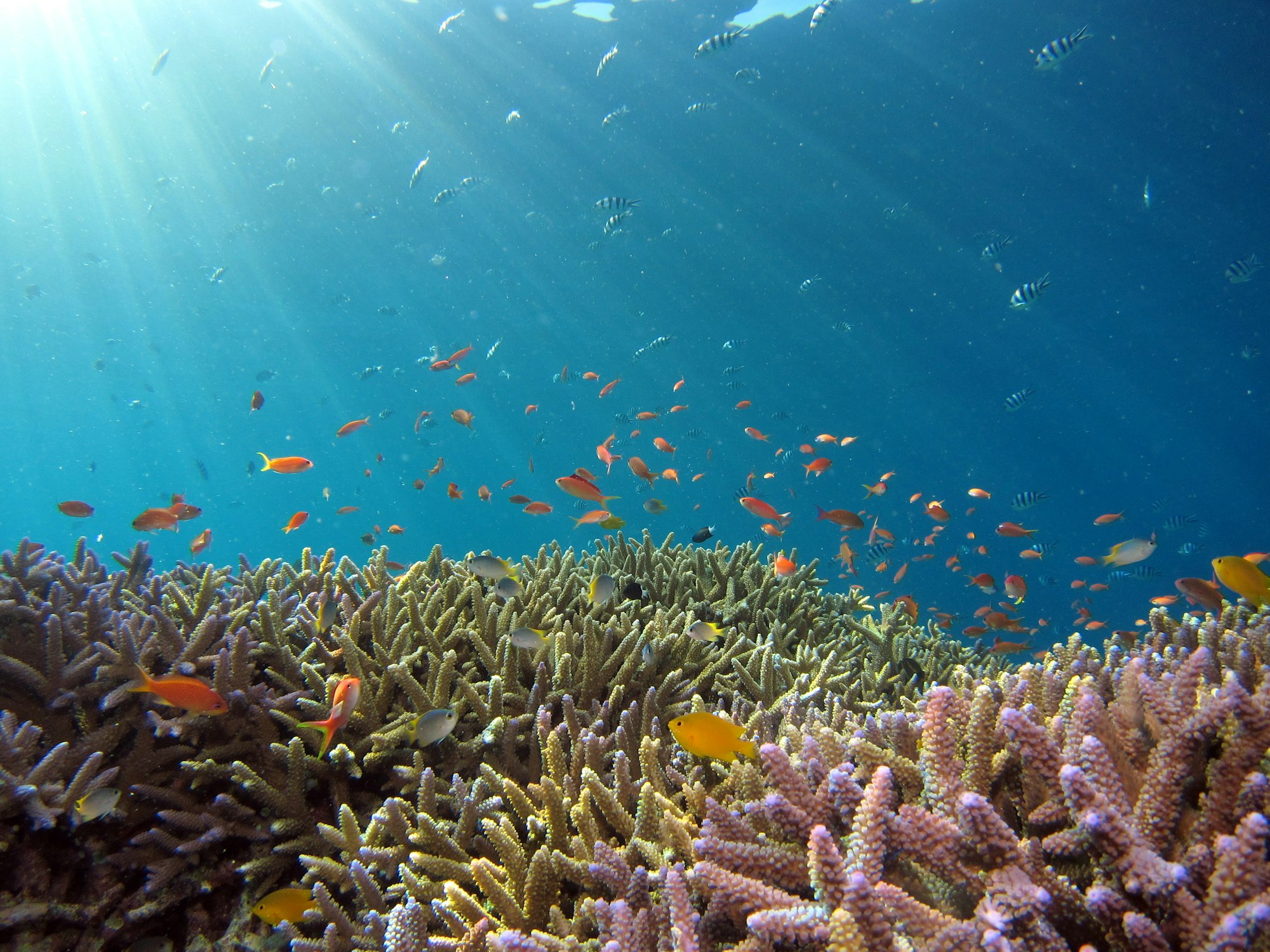
Bull sharks dominate the Arena portion of the dive — the resident population is large and these animals approach the feeding position with calm authority. During tiger shark season, individuals cruise through, occasionally displacing the bull sharks from the feeding area. Tawny nurse sharks and regular nurse sharks pile near the feeders. Away from The Arena, the reef supports Napoleon wrasse, schools of surgeonfish, batfish, and sea turtles. The second dive, shallower and less structured, explores the reef and Cathedral swim-through on the same reef system.
Dive Profile
Boat transfer from Pacific Harbour harbor takes 15–20 minutes on the operator’s dedicated vessels. First dive descends to The Arena at 30 meters, where the structured feeding portion takes place for 10–12 minutes. Divers then ascend the slope to 10 meters for grey reef and whitetip encounters, then move to 4 meters for a shallow finale. Total water time for the standard two-dive package is 60–80 minutes. The second dive is shallower, exploring the Cathedral swim-through and the upper reef structure.
Entry and Exit
Beqa Adventure Divers operates dedicated vessels from Pacific Harbour harbor. Advance booking is required. A thorough briefing covering behavior protocols — no loose equipment, hands in, no reaching toward or chasing sharks — is mandatory before descent. The operator typically requires Advanced certification and a minimum of 50 logged dives; your logbook may be reviewed. Wetsuits are recommended regardless of water temperature; exposure protection is standard practice given the proximity of large sharks.
Tips and Recommendations
- Book the two-dive package: The first dive is the feeding dive; the second explores The Cathedral swim-through and the upper reef. Both are included in the standard package.
- Arrive November–March for tiger sharks: Tiger sharks are not guaranteed but are most frequently sighted during this seasonal window. Check recent trip reports on ScubaBoard’s Fiji forum before targeting a tiger shark sighting.
- Follow the briefing exactly: The operation has an excellent safety record because its protocols are non-negotiable. Loose camera arms, dangling gauges, and any movement toward the sharks are the primary risk factors.
- Bring a wide-angle lens: The action happens within 2–5 meters of divers. A wide-angle or fisheye is ideal. Strobes should be positioned well clear of the housing.
- Consider basing in Pacific Harbour: The dive is worth dedicating a night or two to Pacific Harbour specifically, allowing access to multiple tidal windows rather than a rushed day trip from Nadi.
Safety Considerations
The feeding dive carries inherent risks requiring strict discipline. Follow all briefing instructions without deviation. Maintain position behind the coral barricade at The Arena — bull sharks actively stimulated by feeding are genuinely dangerous to divers who break the protocol. Post-dive surface interval is important given the 30-meter starting depth. Beqa Adventure Divers is not the only operator running shark dives in Beqa Passage; Coral Coast Divers runs a similar program. Both have long operational histories.
Photography
Shark Reef Marine Reserve is one of the world’s best shark photography venues. The animals are predictably positioned at close range in reasonable visibility. Wide-angle shooting at 10–17mm allows full-frame shark portraits. Shoot during the feeding phase when sharks are in the open and most active. Video divers benefit from red filters at 25–30 meters to restore color. The Cathedral on the second dive offers swim-through light-beam shots.
Sources: Beqa Adventure Divers - The Fiji Shark Dive, Diveplanit - The Arena, Tourism Fiji - Shark Reef Marine Reserve. Last updated 2026-05-25.
Sea-surface temperature and wave height from Open-Meteo Marine (ERA5 reanalysis, monthly averages).
724 verified species observations (337 species) logged within ~11 km of this site between 1952 and 2015, from the Ocean Biodiversity Information System.
- Triaenodon obesus
- Carcharhinus leucas
- Carcharhinus amblyrhynchos · Grey Reef Shark
- Carcharhinus melanopterus
- Taeniura lymma
- Polyandrocarpa polypora
- Pseudanthias flavicauda
- Eucoelium mariae
- Aetobatus ocellatus
- Neotrygon australiae
- Bathyoncus lanatus
- Polysyncraton
Scientific survey records skew toward sampled taxa (molluscs, corals) and do not reflect what you are guaranteed to see on a dive.
Source: OBIS (obis.org), aggregated Darwin Core occurrence records.
Conditions change with the tide and the season. If you have dived this site, share what it was actually like — date, visibility, current, and what you saw. Real, recent reports from divers are exactly what this guide is built to collect.
Send a conditions report ›