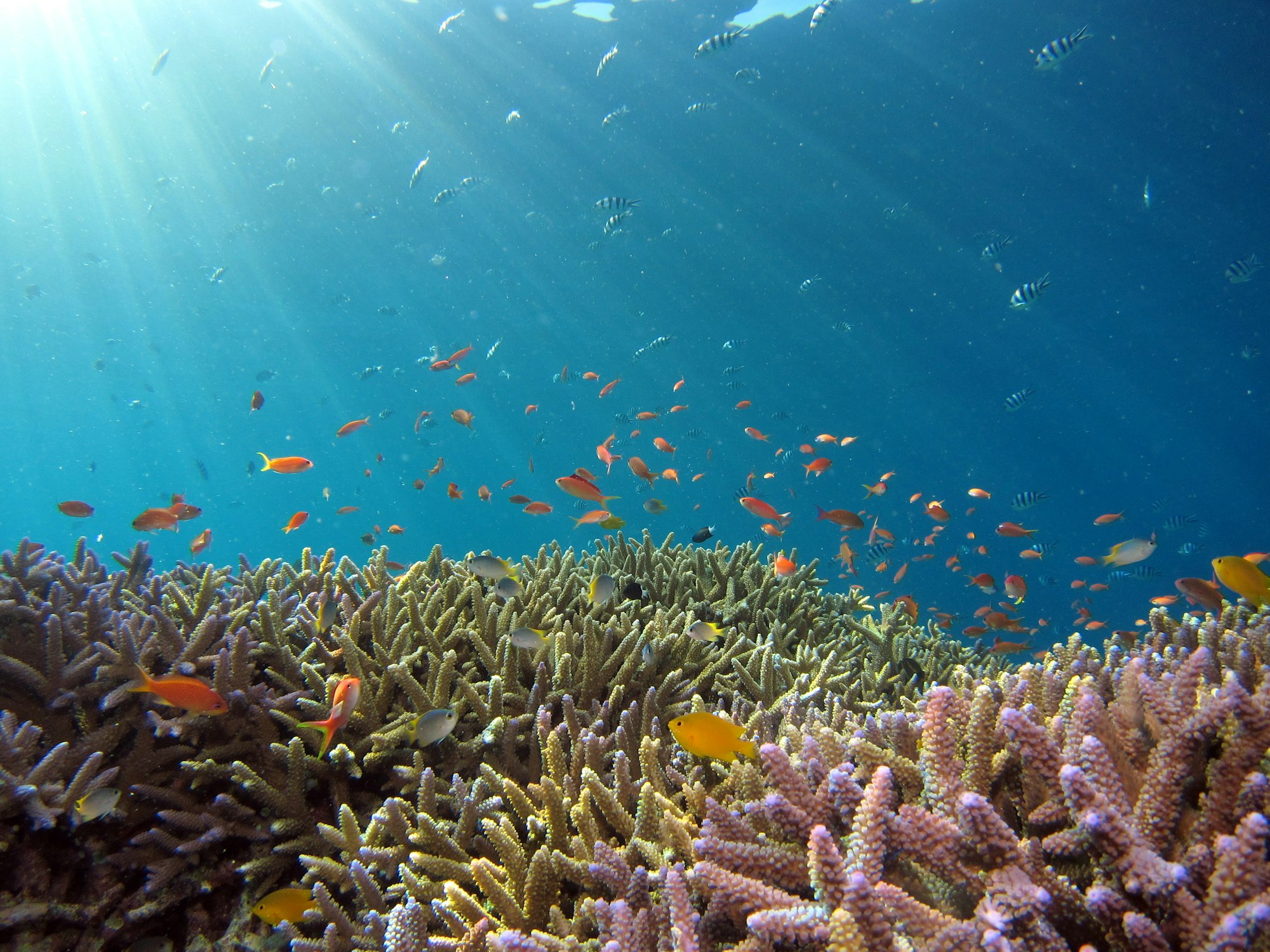
Cabo Marshall
0.0219°S 91.1949°W · wall
Cabo Marshall
The Galapagos’ premier manta ray encounter — a volcanic wall on Isabela’s northeast coast where giant oceanic mantas circle cleaning stations.
Overview
Cabo Marshall sits on the remote northeast coast of Isabela Island, accessible only by liveaboard. This volcanic wall dive is widely considered the best site in the Galapagos for manta ray encounters, with giant oceanic mantas regularly visiting cleaning stations along the wall. The nutrient-rich currents sweeping past this exposed headland also attract hammerhead sharks, Galapagos sharks, and eagle rays, making it one of the archipelago’s most productive pelagic sites.
Site Information
- Location: Northeast coast of Isabela Island, Galapagos Islands
- Entry Type: Boat dive
- Site Type: Wall dive
- Difficulty Level: Advanced
- Maximum Depth: 30 meters
- Typical Visibility: 6–20 meters (variable; nutrient-rich water reduces visibility)
- Current: Strong, often unpredictable
- Best Time: June to November for manta encounters; hammerheads year-round
Marine Life
Giant oceanic manta rays (Mobula birostris, critically endangered) are the star attraction, visiting cleaning stations on the wall where cleaner wrasse remove parasites. Multiple mantas may be present simultaneously, circling the cleaning station repeatedly. Mobula rays often travel in large schools near the surface. Scalloped hammerhead sharks school in deeper water off the wall. Galapagos sharks cruise the wall edge. Spotted eagle rays pass through in formation. Marine iguanas can be seen grazing on algae in the shallows — a behavior unique to the Galapagos. Sea turtles, whitetip reef sharks, barracuda, and large schools of creole fish populate the wall itself. Sea horses have been confirmed along the wall.
Dive Profile
The dive typically begins with a negative descent onto the underwater plateau at approximately 12 meters — this is the primary manta cleaning station area. Cleaner wrasse wait at fixed positions on the plateau for mantas to arrive. When mantas are present, divers settle on the wall below the station and watch from a respectful distance as the rays circle overhead. The wall drops off to 30–40 meters into deep blue water, so depth awareness is critical. The dive finishes with a gradual ascent along the wall, with the safety stop performed in the shallows near the rocky coastline.
Entry and Exit
Panga (inflatable tender) from the liveaboard delivers divers to the entry point, reading the current to select the best drop position. Giant stride or back roll entry depending on panga type. Negative entry is often required due to current. The panga follows bubbles during the dive. Exit via SMB deployment for panga pickup at the end of the drift. Surface conditions can be rough due to the exposed location on Isabela’s windward coast.
Tips and Recommendations
- When mantas are at the cleaning station, stay low against the wall and remain still — they will circle back repeatedly if undisturbed
- Never chase or reach toward mantas; let them come to you for the closest and longest encounters
- Carry a reef hook to secure yourself to the wall while watching the cleaning station in current
- Wear a 7mm wetsuit; Isabela’s northeast coast receives cold upwelling currents that can drop temps to 17°C
- Be prepared for the possibility that conditions may prevent diving this site — it is highly weather-dependent
Safety Considerations
Strong and variable currents are the primary hazard. The exposed northeast coast of Isabela receives open-ocean swell and wind, making surface conditions unpredictable. Downcurrents along the wall can pull divers deeper — stay aware of depth and be prepared to inflate your BCD and kick away from the wall if needed. Cold thermoclines are common. The remote location means long surface intervals before emergency evacuation is possible. Always carry an SMB, whistle, and mirror. Dive guides may call the dive early if conditions deteriorate.
Photography
Mantas at cleaning stations offer world-class wide-angle photography. Position yourself below and to the side of the station with a fisheye or ultra-wide lens, shooting upward to silhouette the mantas against the surface light. Strobes are useful for filling the manta’s white belly pattern. Hammerhead schools off the wall require fast shutter speeds (1/200+) and good blue-water shooting technique. Marine iguanas grazing on algae in the shallows provide a unique macro or close-focus wide-angle subject found nowhere else on Earth.
Sources: Starfish.ch – Western Galapagos Dive Sites, LiveAboard.com – Cabo Marshall, Aqua Mundo Galapagos – Cape Marshall, Galapagos Conservation Trust – Oceanic Manta Ray. Last updated 2026-05-30.
Sea-surface temperature and wave height from Open-Meteo Marine (ERA5 reanalysis, monthly averages).
734 verified species observations (149 species) logged within ~11 km of this site between 1849 and 2022, from the Ocean Biodiversity Information System.
- Stegastes beebei
- Bodianus diplotaenia
- Stegastes arcifrons
- Cirrhitichthys oxycephalus
- Scarus ghobban
- Thalassoma lucasanum
- Mycteroperca olfax
- Halichoeres nicholsi
- Holacanthus passer
- Epinephelus labriformis
- Apogon atradorsatus
- Johnrandallia nigrirostris
Scientific survey records skew toward sampled taxa (molluscs, corals) and do not reflect what you are guaranteed to see on a dive.
Source: OBIS (obis.org), aggregated Darwin Core occurrence records.
Conditions change with the tide and the season. If you have dived this site, share what it was actually like — date, visibility, current, and what you saw. Real, recent reports from divers are exactly what this guide is built to collect.
Send a conditions report ›