Daphne Minor
0.4000°S 90.3700°W · wall
Daphne Minor
A lesser-known Galapagos wall dive with two distinct characters — a cave-like entrance sheltering resting whitetip sharks, and a deep black coral wall draped in gorgonians, sponges, and tunicates.
Overview
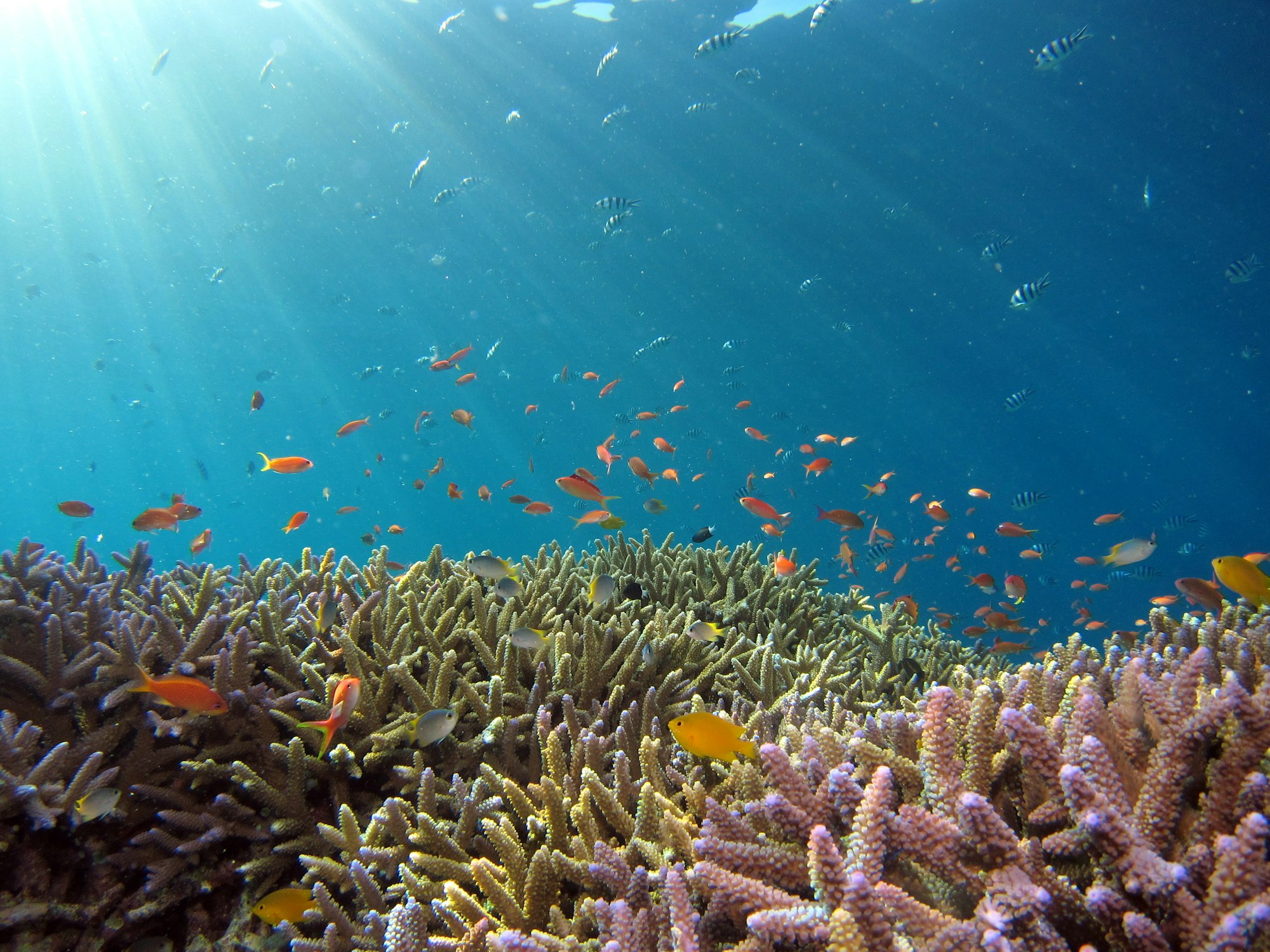
Daphne Minor is a small tuff cone island northwest of Itabaca Channel, about 40 minutes by boat from Santa Cruz. While Darwin’s Arch and Gordon Rocks attract the limelight, Daphne Minor offers what Scuba Iguana describes as an “unjustly little-known, beautiful dive site” that groups frequently have entirely to themselves. The site features two contrasting topographies on opposite sides of the island: a shallow section with platform, small caves, and sea lion interaction; and a deep wall covered in black corals, gorgonians, sponges, and tunicates that creates a dense, colorful reef community. Currents range from moderate to strong.
No sources confirm marine iguana underwater feeding at Daphne Minor. Marine iguana diving behavior in the Galapagos is best observed at Cabo Douglas (Fernandina) and certain Isabela sites where the documented iguana populations feed.
Site Information
- Location: Between Santa Cruz and Santiago Islands, Galapagos Islands
- Entry Type: Boat dive
- Site Type: Wall dive
- Difficulty Level: Advanced
- Maximum Depth: 23 meters
- Typical Visibility: Variable; consistent plankton in the water reduces visibility but supports rich filter feeders
- Current: Moderate to strong
- Best Time: Year-round; diving here is uncommon, increasing chances of solitude
Marine Life
Whitetip reef sharks rest in the small cave at the beginning of the dive, alongside playful sea lions. Galapagos sharks and juvenile Galapagos sharks patrol the outer areas. Stingrays, mobulas, and eagle rays cruise past. Green sea turtles are present. The black coral wall and gorgonians support a dense invertebrate community — corals, sponges, tunicates — plus schools of bonito tuna, trumpetfish, parrotfish, barracuda, and various snappers and groupers. Seahorses and Galapagos blennies have been confirmed as macro subjects. Manta rays are described by Academy Bay Diving as a frequent visitor. Frogfish have been reported in the rocky substrate.
Dive Profile
The dive begins at a shallow section with a small cave (not a cave dive — no penetration required) where the whitetip sharks are typically found and sea lions are interactive. Moving around the island, the topography shifts to a deep wall densely covered in black corals, gorgonians, and sponges, descending to 20-25 meters. Divers work along the wall with the current, ascending gradually. A shallow safety stop area provides good light for a final look at the reef community.
Entry and Exit
Panga from day boat or liveaboard to entry on the lee side of the island. Giant stride entry near the cave section. The dive follows the wall with the current, drifting around the island. Exit via SMB deployment for panga pickup. Moderate to strong currents mean the panga should track divers’ bubbles throughout.
Tips and Recommendations
- Ask your guide which side of the island is sheltered from current that day — entry point varies
- Spend time at the cave entrance in the shallows before descending to the wall
- Use a dive light to illuminate the overhangs and reveal the full coloration of the black corals and sponges
- This site is frequently uncrowded; a good choice when Gordon Rocks is booked out
Safety Considerations
Currents around the island can strengthen at points where the island profile changes. The volcanic rock is sharp — maintain buoyancy control near the wall. The cold water (18-22°C) accelerates air consumption; plan dive times accordingly. Consistent plankton can reduce visibility. Carry an SMB, whistle, and mirror for exit. Standard Galapagos remoteness and thermal protection requirements apply.
Sources: Scuba Iguana – Daphne, NatureGalapagos – Daphne Minor Scuba Diving, Academy Bay Diving – Galapagos Dive Sites, PADI – Daphne Dive Site. Last updated 2026-05-30.
Sea-surface temperature and wave height from Open-Meteo Marine (ERA5 reanalysis, monthly averages).
2640 verified species observations (257 species) logged within ~11 km of this site between 1898 and 2021, from the Ocean Biodiversity Information System.
- Chelonia mydas · Tortuga verde
- Thalassoma lucasanum
- Mycteroperca olfax
- Scarus ghobban
- Zalophus wollebaeki · Lobo marino de un pelo
- Muraena lentiginosa
- Bathygobius soporator
- Holacanthus passer
- Platygillellus rubellulus
- Plagiotremus azaleus
- Apogon atradorsatus
- Stegastes beebei
Scientific survey records skew toward sampled taxa (molluscs, corals) and do not reflect what you are guaranteed to see on a dive.
Source: OBIS (obis.org), aggregated Darwin Core occurrence records.
Conditions change with the tide and the season. If you have dived this site, share what it was actually like — date, visibility, current, and what you saw. Real, recent reports from divers are exactly what this guide is built to collect.
Send a conditions report ›