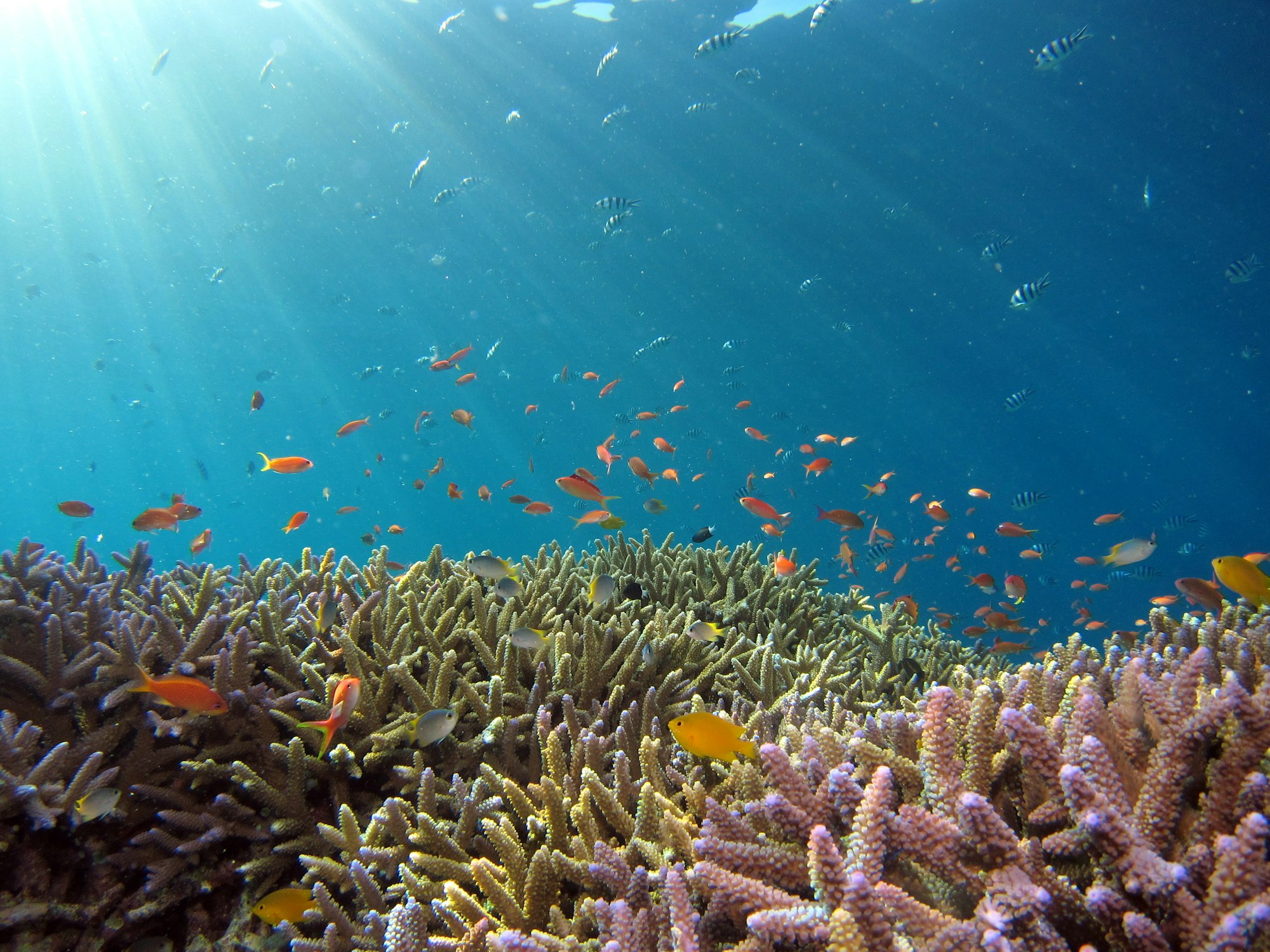
Darwin's Arch
1.6731°N 91.9895°W · pinnacle
Darwin’s Arch
The pinnacle of Galápagos diving — a submerged volcanic plateau where schooling hammerheads number in the hundreds and whale sharks cruise past during season.
Overview
Darwin’s Arch — now locally known as “Darwin’s Pillars” or the “Pillars of Evolution” after the natural rock arch collapsed from erosion on May 17, 2021 at 11:20 a.m. Galápagos Time — is widely considered one of the greatest dive sites on Earth. The former arch stood 43 meters high, 70 meters long, and 23 meters wide (confirmed by Wikipedia and news reports from the day of collapse). Located off the southwest coast of Darwin Island, the northernmost point of the Galápagos archipelago, it sits at the tip of an extinct underwater volcano where powerful ocean currents converge. The collapse of the surface arch had no effect on the underwater experience: the submerged rocky plateau known as “the Theatre” remains intact, with the primary viewing platform at 18 meters, where divers anchor to rocks and watch walls of hammerheads stream past in the blue. Whale sharks — typically large females, up to 14 meters in length — appear from early July, confirmed by Wikipedia’s documentation of the site. The two remaining rock pillars (the former arch columns) rise from the Theatre platform and now define the site’s silhouette.
Site Information
- Location: Darwin Island (Isla Darwin), northernmost Galápagos, approximately 100 km north of Isabela
- Entry Type: Boat dive
- Site Type: Pinnacle/seamount
- Difficulty Level: Advanced
- Maximum Depth: 30 meters
- Typical Visibility: 10–20 meters (up to 30 meters in optimal conditions)
- Current: Strong to very strong (3–5 knots recorded); highly variable
- Water Temperature: 21–27°C surface, with thermoclines dropping to 15–18°C
- Best Time: June to November for hammerheads and whale sharks; mantas more common January–May
Marine Life
Scalloped hammerhead sharks are the signature encounter — schools of dozens to hundreds concentrate at 15–20 meters around the Theatre. Whale sharks appear seasonally (most reliably July–November), typically large females. Galápagos sharks, silky sharks, and blacktip sharks are present year-round. Massive schools of big-eye jacks form dark clouds silhouetted against the surface light. Green sea turtles congregate in large groups. Yellowfin tuna, rainbow runners, and pompanos patrol the blue water. Manta rays visit during the warm season (January–May). Dolphins and false killer whales have been reported during safety stops and surface intervals. Cold-season visitors include mola mola. On the reef structure itself: king angelfish, creolefish, Mexican hogfish, razor surgeonfish, leather bass, blue-gold snappers, garden eels, and moray eels.
Dive Profile
Divers make negative entries from the panga directly into blue water, descending quickly to reach the Theatre — a submerged rocky plateau with the main viewing platform at 18 meters. Once on the plateau, the strategy is to anchor to rocks and hold position, letting the current bring marine life past. The two remaining rock pillars (former arch columns) rise from this plateau. Walls extend from the plateau edges and can be used for drift diving when current direction allows. Downcurrents have been reported at 25–33 meters — avoid descending below your planned depth. Safety stops are frequently conducted in open blue water rather than on structure. Nitrox is described by operators as “virtually essential.”
Entry and Exit
Access exclusively by liveaboard — Darwin Island requires an overnight crossing from the main archipelago. Entry by panga with negative descent. Operators provide satellite beacons for separated divers. Deploy SMBs during safety stops for panga retrieval. The crossing itself can be rough; motion sickness medication is advisable.
Tips
- Nitrox 32% or higher is strongly recommended for every dive here
- Bring a reef hook if your operator allows them — holding position on the Theatre in strong current is the key to great encounters
- Multiple dives are scheduled at Darwin on liveaboard itineraries — conditions vary dramatically between dives, so a disappointing first dive may be followed by a spectacular one
- Carry a satellite beacon; currents at 3–5 knots can separate divers from the group rapidly
- The post-2021 arch collapse has not affected underwater diving conditions
Safety
Currents at Darwin’s Arch are among the strongest in recreational diving — 3 knots is common and 5 knots has been recorded. Currents eddy and swirl unpredictably around the formation. Downcurrents at depth are a real hazard. Negative entries are mandatory. This site demands solid drift diving experience, excellent buoyancy control, and comfort in open-ocean blue water conditions. Never swim against the current. Carry an SMB, audible signaling device, and satellite beacon. Dive within your certification limits — the spectacle happens at 15–20 meters, not at depth.
Sources: Wikipedia – Darwin’s Arch, Master Liveaboards – Darwin’s Arch Diving, Happy Gringo – Darwin & Wolf Islands, Dive The World – Darwin & Wolf Island. GPS coordinates contributed by ScubaBoard user Dan. Last updated 2026-05-30.
Sea-surface temperature and wave height from Open-Meteo Marine (ERA5 reanalysis, monthly averages).
5699 verified species observations (154 species) logged within ~11 km of this site between 1989 and 2022, from the Ocean Biodiversity Information System.
- Rhincodon typus · Whale shark
- Dermatolepis dermatolepis
- Stegastes arcifrons
- Acanthurus nigricans
- Johnrandallia nigrirostris
- Epinephelus labriformis
- Melichthys niger
- Ophioblennius steindachneri
- Mycteroperca olfax
- Bodianus diplotaenia
- Cirrhitus rivulatus
- Scarus rubroviolaceus
Scientific survey records skew toward sampled taxa (molluscs, corals) and do not reflect what you are guaranteed to see on a dive.
Source: OBIS (obis.org), aggregated Darwin Core occurrence records.
Conditions change with the tide and the season. If you have dived this site, share what it was actually like — date, visibility, current, and what you saw. Real, recent reports from divers are exactly what this guide is built to collect.
Send a conditions report ›