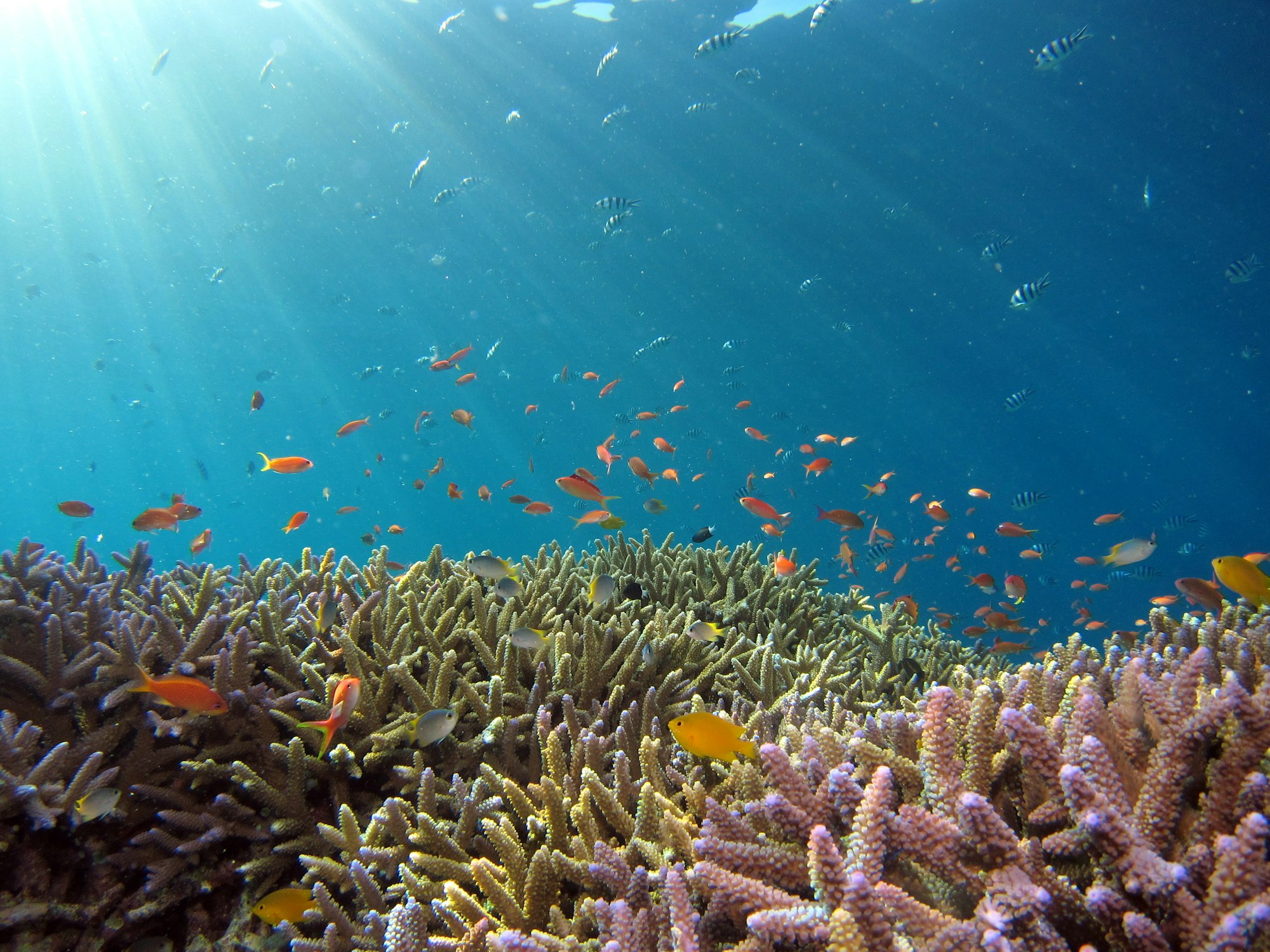
Isla Bartolome
0.2800°S 90.5400°W · reef
Isla Bartolome
Dive beneath Pinnacle Rock for a volcanic reef platform stacked with whitetip sharks, rays, sea turtles, and sea lions — with Galapagos penguins to spot on the surface post-dive.
Overview
Isla Bartolome sits off the east coast of Santiago Island, defined above water by the iconic Pinnacle Rock — one of the most photographed volcanic formations in the Galapagos. Below the surface, the dive occupies a broad sandy and rocky platform at approximately 10 meters, with underwater cliffs beginning around 15 meters that attract pelagic species. The site is accessible by Galapagos standards, with moderate currents and a relatively sheltered position. It is often combined with Cousins Rock on day trips and liveaboard itineraries.
Galapagos penguins — the world’s only equatorial penguin and the only penguin found north of the equator — inhabit Bartolome Island. They are reliably seen on the rocks and surface from the boat after diving. Occasional in-water sightings have been reported in the shallows near the surface, but the dive is not structured around penguin encounters, and multiple operator descriptions confirm that the penguin viewing experience at this site is primarily topside.
Site Information
- Location: Bartolome Island, near Santiago Island, Galapagos Islands
- Entry Type: Boat dive
- Site Type: Reef
- Difficulty Level: Advanced
- Maximum Depth: 25 meters
- Typical Visibility: 10-18 meters (30-60 feet); warm season (Dec-May) averages ~12m
- Current: Mild to moderate
- Best Time: Year-round; warm season for better visibility
Marine Life
Whitetip reef sharks are a reliable presence, resting on the sandy platform between rock formations or cruising the reef edges. Galapagos sharks patrol the outer sections along the cliffs. Stingrays, marbled rays, and golden cownose rays cruise the sandy bottom; eagle rays and mobulas are seen seasonally. Green sea turtles graze on algae-covered rocks. Sea lions are ever-present and engage divers in the shallows. Stone scorpionfish, flounders, grunts, snappers, groupers, and parrotfish populate the rocky platform. One ScubaBoard trip report recorded hammerhead sharks approaching to close range at the site. Manta rays have been documented here in season.
No site-specific sources confirm regular underwater penguin encounters during dives at Bartolome. Post-dive surface views of penguins at Pinnacle Rock are consistently reported.
Dive Profile
The dive begins over a large sandy and rocky platform at approximately 10 meters depth — this is where most of the interesting life concentrates. Underwater cliffs beginning at around 15 meters descend to the maximum depth of 25 meters and offer additional encounters with pelagic species. Divers typically explore the platform, with an excursion along the cliffs for depth. Boulders, lava formations, and sandy channels create varied terrain. Sea lion interactions occur throughout, particularly in the shallows. Safety stop is easy to execute in the sheltered, shallow platform area.
Entry and Exit
Panga from liveaboard or day boat to entry point near Pinnacle Rock. Giant stride entry into relatively sheltered water. The dive is typically a gentle swim over the volcanic bottom. Current is usually mild. Exit via panga pickup. Surface conditions are generally calm in the lee of the island.
Tips and Recommendations
- Look carefully at the sandy patches between rocks for camouflaged scorpionfish and resting stingrays
- The post-dive boat approach to Pinnacle Rock for penguin viewing is reliably productive — bring a camera with zoom for topside shots
- Morning dives have better visibility in the warm season; cold season (June-November) brings stronger currents and more pelagic activity
- This site pairs well with Cousins Rock on the same day — the two sites are approximately 15 minutes apart by boat
Safety Considerations
This is one of the calmer Galapagos dive sites, but the Advanced rating reflects the remote location, cold water (18-23°C seasonally), and distance from medical facilities. Currents can pick up during tidal changes. Volcanic rock formations include sharp edges — maintain buoyancy control. Standard Galapagos equipment and thermal protection (5-7mm wetsuit) apply. Carry an SMB and signaling devices.
Photography
Wide-angle is the primary lens here — sea lions, sharks, and rays against the volcanic platform background. One first-person trip report described swimming through a fish school so dense that visibility dropped to near-zero — a dramatic wide-angle subject when encountered. For surface photography, a telephoto zoom captures the penguins perched on Pinnacle Rock post-dive. Split-level shots of the rock formation are possible when surface conditions are calm.
Sources: Scuba Iguana – Bartolome, Academy Bay Diving – Galapagos Dive Sites, Happy Gringo – Bartholomew Island Guide, ScubaBoard – Galapagos Sep 2021 Dive Report. Last updated 2026-05-30.
Sea-surface temperature and wave height from Open-Meteo Marine (ERA5 reanalysis, monthly averages).
7833 verified species observations (194 species) logged within ~11 km of this site between 1934 and 2022, from the Ocean Biodiversity Information System.
- Halichoeres dispilus
- Halichoeres nicholsi
- Plagiotremus azaleus
- Ophioblennius steindachneri
- Thalassoma lucasanum
- Lythrypnus gilberti
- Epinephelus labriformis
- Apogon atradorsatus
- Mycteroperca olfax
- Bodianus diplotaenia
- Lutjanus viridis
- Scarus ghobban
Scientific survey records skew toward sampled taxa (molluscs, corals) and do not reflect what you are guaranteed to see on a dive.
Source: OBIS (obis.org), aggregated Darwin Core occurrence records.
Conditions change with the tide and the season. If you have dived this site, share what it was actually like — date, visibility, current, and what you saw. Real, recent reports from divers are exactly what this guide is built to collect.
Send a conditions report ›