Cousins Rock
0.2364°S 90.5742°W · wall
Cousins Rock
A small submerged rock near Santiago delivering the rare Galapagos combination of macro treasures — seahorses and frogfish — alongside playful sea lions and black coral gardens.
Overview
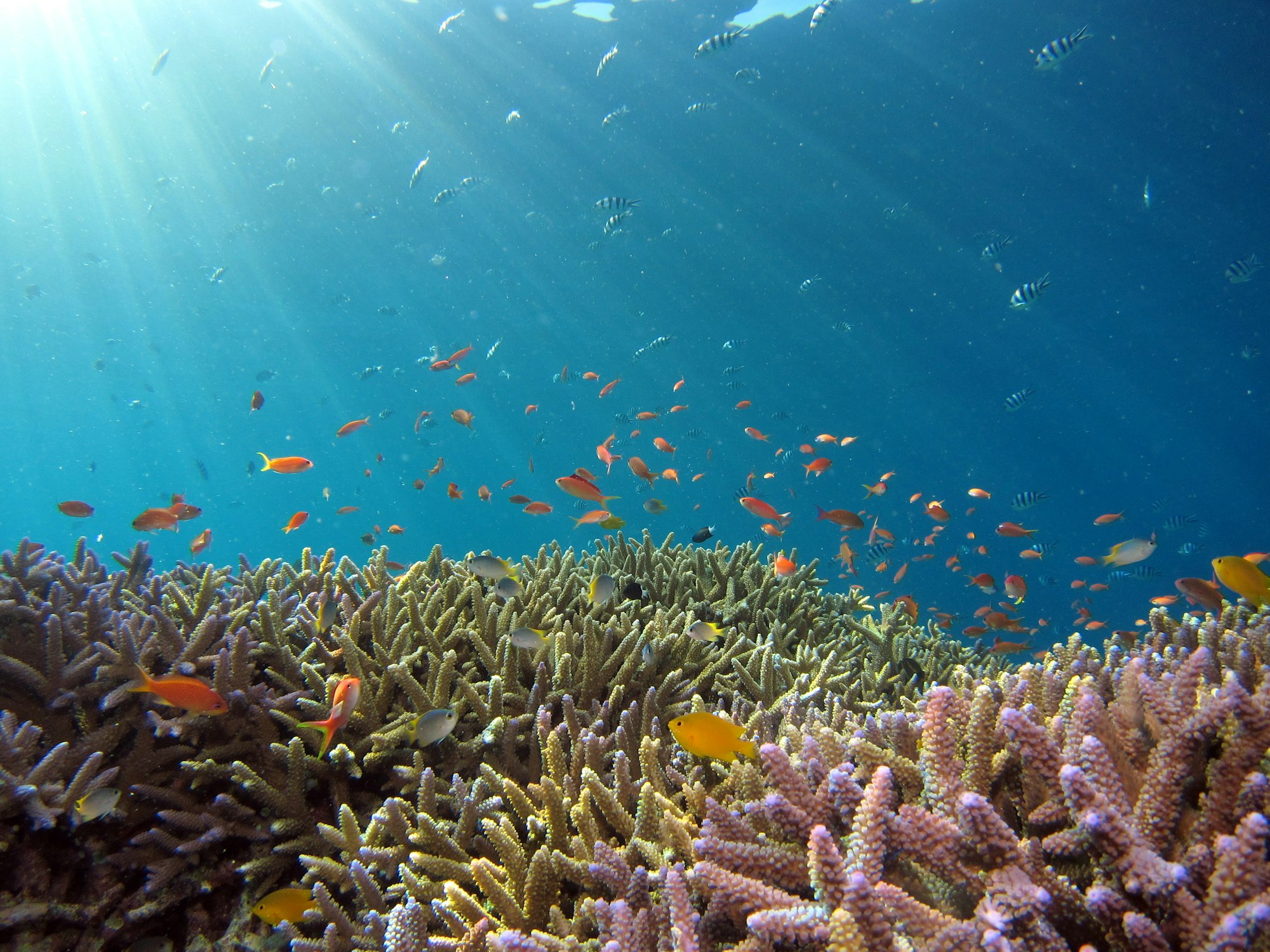
Cousins Rock is a small tuff cone located northeast of Santiago Island — approximately 15 minutes by boat from Bartolome — offering one of the more sheltered dives in the Galapagos. The site is distinctive for combining genuine macro diving — seahorses, frogfish, nudibranchs — with the big-animal encounters the Galapagos is famous for. The wall features dramatic overhangs and crevices draped in black coral and sea fans, creating a rich and visually complex reef ecosystem. A resident sea lion colony uses the rock as a playground, frequently joining divers for extended, interactive encounters.
Site Information
- Location: Northeast of Santiago Island, Galapagos Islands (approximately 15 minutes by boat from Bartolome)
- Entry Type: Boat dive
- Site Type: Wall dive
- Difficulty Level: Advanced
- Maximum Depth: 30 meters
- Typical Visibility: 10-20 meters (30-65 feet)
- Current: Mild to moderate (one of the more sheltered Galapagos sites)
- Best Time: Year-round; June to November for best visibility
Marine Life
Pacific seahorses are found clinging to gorgonians and rocky outcrops along the wall. Frogfish hide among the sponges and coral. Sea lions from the nearby colony are constant companions, spiraling around divers, blowing bubbles, and making eye contact at close range. The wall is decorated with extensive black coral trees and large sea fans. Whitetip reef sharks rest in crevices and under overhangs. Spotted eagle rays cruise past the wall edge. Schools of barracuda and creole fish swirl in the blue. Moray eels peer from holes in the rock. King angelfish, hawkfish, and diverse reef fish populate the wall. Green sea turtles rest on ledges throughout the site.
Dive Profile
The dive descends along the wall of the submerged rock formation, typically reaching maximum depth of 25-30 meters on the deeper side. The wall features a series of overhangs, ledges, and crevices that reward careful exploration. The richest macro life is found in the 12-20 meter range along the wall face. Divers work their way around the rock, gradually ascending. The shallower sections near the top of the rock (5-10 meters) are where sea lion encounters are most frequent and prolonged. Safety stop is performed on the reef top or in open water near the rock.
Entry and Exit
Panga drop from liveaboard or day boat, positioned upstream of the rock based on current direction. Giant stride entry with descent along a reference point on the wall. Current is generally manageable compared to other Galapagos sites, but conditions vary. Exit via SMB deployment for panga pickup. The sheltered nature of the site means surface conditions are usually calmer than at exposed headlands.
Tips and Recommendations
- Split your dive time between the deep wall for macro subjects and the shallow top for sea lion play — both are worth extended exploration
- Look carefully in the black coral and gorgonians for seahorses; ask your guide where the current residents are hiding
- Sea lions are most interactive when divers are relaxed and still — stop moving and let them come to you
- This is one of the few Galapagos sites where a macro lens is genuinely worthwhile
- Carry a light or torch to illuminate the overhangs and crevices where frogfish and resting sharks hide
Safety Considerations
Currents are generally milder than at other Galapagos sites, but can still be present and may shift during the dive. The wall drops to depth, requiring standard depth awareness. Overhangs and crevices can trap bubbles and create disorientation in low visibility. Sea lions are playful but can be boisterous — protect your equipment and do not attempt to touch them. Standard Galapagos thermal protection is needed; water temperatures range from 18-24°C. Carry an SMB and signaling devices.
Photography
One of the most versatile photography sites in the Galapagos. Sea lions are exceptionally photogenic subjects — they approach closely, make eye contact, and spiral around divers, rewarding wide-angle shooters with engaging portraits and interaction shots. Seahorses and frogfish provide genuine macro opportunities rare in the Galapagos. Black coral gardens and sea fans create beautiful backgrounds for wide-angle reef scenes. The combination of subjects makes this a site where both a macro and wide-angle setup would be used to full advantage. If forced to choose one lens, go wide-angle for the sea lions.
Sources: Scuba Iguana – Cousins Rock, Dive The World – Galapagos, Royal Galapagos – Cousins Rocks, Starfish.ch – Central Galapagos. Last updated 2026-05-30.
Sea-surface temperature and wave height from Open-Meteo Marine (ERA5 reanalysis, monthly averages).
7411 verified species observations (192 species) logged within ~11 km of this site between 1934 and 2022, from the Ocean Biodiversity Information System.
- Halichoeres dispilus
- Halichoeres nicholsi
- Holacanthus passer
- Plagiotremus azaleus
- Lutjanus viridis
- Ophioblennius steindachneri
- Bodianus diplotaenia
- Stegastes beebei
- Lythrypnus gilberti
- Apogon atradorsatus
- Mycteroperca olfax
- Scarus rubroviolaceus
Scientific survey records skew toward sampled taxa (molluscs, corals) and do not reflect what you are guaranteed to see on a dive.
Source: OBIS (obis.org), aggregated Darwin Core occurrence records.
Conditions change with the tide and the season. If you have dived this site, share what it was actually like — date, visibility, current, and what you saw. Real, recent reports from divers are exactly what this guide is built to collect.
Send a conditions report ›