Plazas
0.5796°S 90.1598°W · reef
Plazas
A shallow reef dive off South Plaza Island where a large sea lion colony turns every dive into an interactive experience on fine sandy bottom with garden eels and pelagic visitors.
Overview
Plazas (Plaza Islets) is located on the east side of Santa Cruz, where North and South Plaza are divided by a narrow channel. The dive takes place on the seaward side of the islets, over a sandy and rocky bottom at 15–18 meters with strong currents possible. The site is used as a check dive and staging point — Gordon Rocks is just minutes away. The sandy bottom supports Pacific garden eels, and the channel edges attract rays, sharks, and sea turtles. Note: the sea lion colony beaches on the opposite side of the islet from the dive site, so underwater sea lion encounters here are possible but not a guaranteed feature — they are more reliable at Mosquera and North Seymour. Gordon Rocks briefings are sometimes conducted here, with Plazas serving as an equipment-check location before the demanding crater dive.
Site Information
- Location: Plaza Islets, east of Santa Cruz, Galapagos Islands
- Entry Type: Boat dive
- Site Type: Reef
- Difficulty Level: Advanced
- Maximum Depth: 18 meters
- Typical Visibility: 10-18 meters (can be lower when currents are running)
- Current: Can be strong; currents sweep through the narrow channel
- Best Time: Year-round; sea lions always present
Marine Life
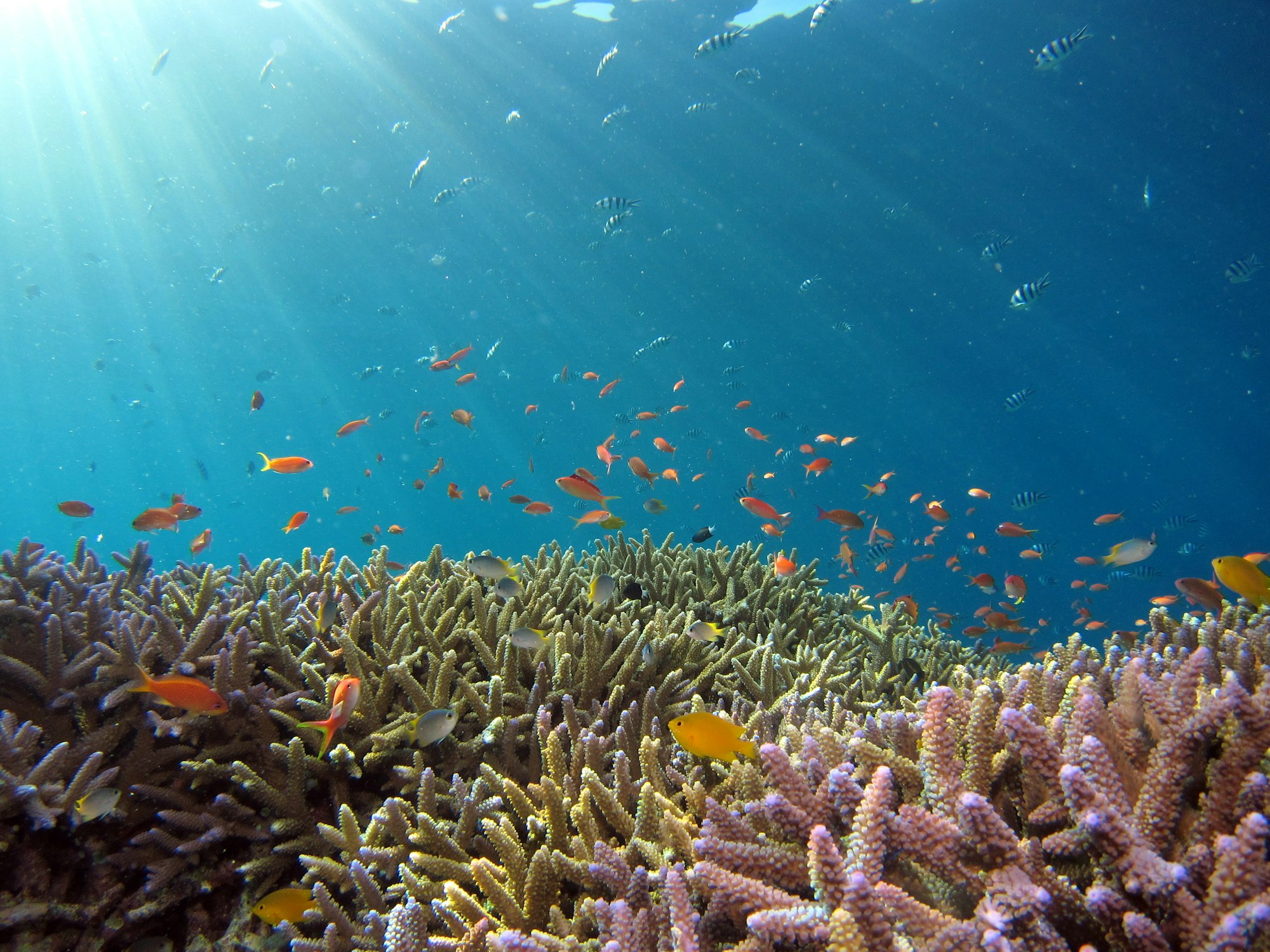
Pacific garden eels are the most reliable encounter, emerging from the sandy floor in large numbers and retreating into their burrows as divers approach. Sea lions may visit the dive site, but the colony beaches on the opposite (landward) side of the islet — underwater interactions here are opportunistic, not guaranteed. Spotted eagle rays, stingrays, and golden cownose rays cruise through. Butterflyfishes, damselfishes, wrasses, and moorish idols populate the rocky reef edges. Juvenile barracuda and whitetip reef sharks patrol the channel. Sea turtles visit regularly.
Dive Profile
The dive follows the sandy channel floor between the two islets, descending from the surface to a maximum of approximately 15-18 meters. The terrain is relatively flat — fine sand and silt with rocky margins along the island flanks. The strong currents that periodically sweep the channel concentrate marine life and can produce drift diving conditions. The most active sea lion encounters happen in the upper water column (5-10 meters). Garden eels are found on the sandy flat at mid-depth. The site is frequently used as a check dive or briefing location before more demanding sites.
Entry and Exit
Day boat from Puerto Ayora with a short transit. Giant stride entry into the channel. Currents can be strong — assess conditions and plan the drift carefully. The boat repositions to meet divers. Exit via panga pickup or return to the boat if conditions permit. SMB deployment is recommended. Conditions are generally calmer here than at Gordon Rocks or other exposed central Galapagos sites.
Tips and Recommendations
- Gordon Rocks trips sometimes include a Plazas check dive first — use this time to dial in your weighting for Galapagos conditions
- Approach garden eel colonies very slowly and low to the bottom; they disappear rapidly if disturbed
- Current can pick up quickly; carry a reef hook if you want to hold position
- Garden eel colonies make for interesting macro photography — approach slowly and low for best results
Safety Considerations
The channel between the islets can funnel strong tidal currents without warning. Despite the shallower depths, be prepared for genuine drift conditions and stay oriented relative to your exit point. Sea lions are playful but protect loose gear from curious pups. Standard Galapagos thermal protection applies (water temperature 17-25°C seasonally). Carry an SMB and signaling devices.
Sources: Starfish.ch – Central Galapagos Dive Sites, The Portuguese Traveler – 24 Best Galapagos Dive Sites, Academy Bay Diving – Galapagos Dive Sites. Last updated 2026-05-30.
Sea-surface temperature and wave height from Open-Meteo Marine (ERA5 reanalysis, monthly averages).
1865 verified species observations (193 species) logged within ~11 km of this site between 1932 and 2023, from the Ocean Biodiversity Information System.
- Mycteroperca olfax
- Mugil thoburni
- Seriola rivoliana
- Zalophus wollebaeki · Lobo marino de un pelo
- Paralabrax albomaculatus
- Pontinus
- Haemulidae
- Carangidae
- Bodianus diplotaenia
- Lutjanus
- Hemilutjanus macrophthalmos
- Caulolatilus princeps
Scientific survey records skew toward sampled taxa (molluscs, corals) and do not reflect what you are guaranteed to see on a dive.
Source: OBIS (obis.org), aggregated Darwin Core occurrence records.
Conditions change with the tide and the season. If you have dived this site, share what it was actually like — date, visibility, current, and what you saw. Real, recent reports from divers are exactly what this guide is built to collect.
Send a conditions report ›