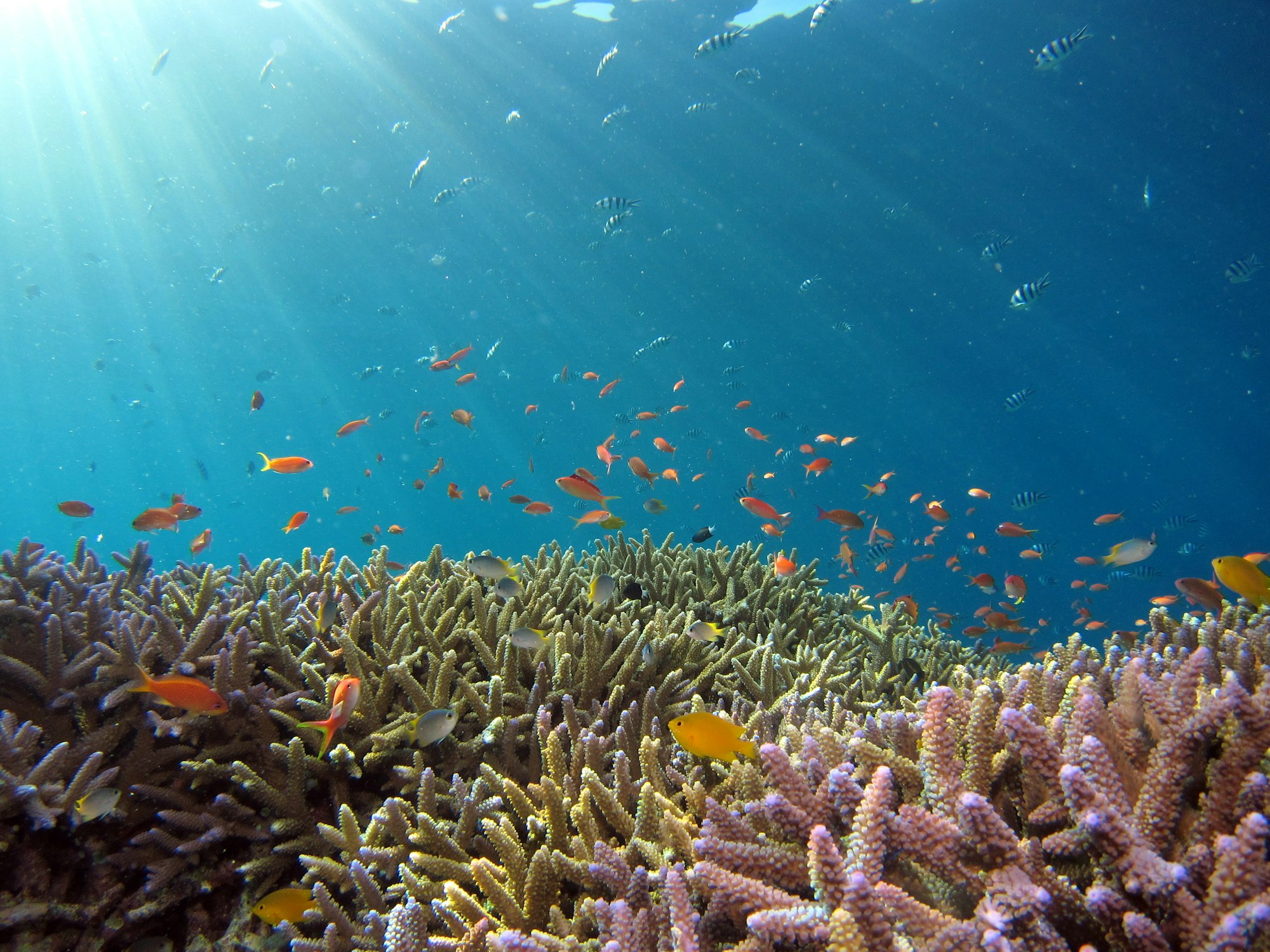
Shark Bay
1.3820°N 91.8113°W · wall
Shark Bay
A sheltered bay on Wolf Island with a sheer wall, caverns, and tunnel systems — and one of the only sites in all the Galápagos where night diving is permitted.
Overview
Shark Bay (Bahía Tiburón) occupies a protected bay on Wolf Island, offering a different character from the exposed boulder slopes at nearby Landslide. A sheer wall drops away with caverns, tunnels, and rock formations cut into the volcanic rock. The bay provides partial shelter from open-ocean conditions, though currents remain strong and frequently produce unplanned drift dives. Hammerhead schools, Galápagos sharks, and silky sharks aggregate here in numbers, while the Fondeadero anchorage area is famously one of the only locations in the entire archipelago where night diving is allowed.
Site Information
- Location: Wolf Island (Isla Wolf), sheltered bay, Galápagos Islands
- Entry Type: Boat dive
- Site Type: Wall dive
- Difficulty Level: Advanced
- Maximum Depth: 27 meters
- Typical Visibility: 10–20 meters
- Current: Strong, variable direction; can produce unexpected drift dives
- Water Temperature: 23–24°C
- Best Time: June to November
Marine Life
Scalloped hammerhead sharks are the headliner, typically encountered in schools at 15–20 meters depth toward the outer bay. Galápagos sharks and silky sharks are regular visitors alongside them. Whale sharks have been documented here seasonally. Galápagos sea lions are playful and abundant in the shallower bay sections. Eagle rays, golden cowrays, green sea turtles, and dolphins are reported across multiple sources. Moray eels inhabit the wall crevices and cavern entrances. Schools of snappers and jacks patrol the wall face.
Night dives at the Fondeadero anchorage reveal bioluminescent plankton, Galápagos fur seals, and nocturnal reef species not seen during the day.
Dive Profile
The dive begins at approximately 10 meters in the shallower inner bay, where sea lions are most interactive. Moving further out, the wall drops to 27 meters with caverns and swim-throughs. Hammerhead schools and ray aggregations concentrate at 15–20 meters in the outer section. The recommended technique is the same as other Wolf Island sites: find a sheltered position on the wall or reef, wedge in, and let the sharks come to you. Active swimming against the current is counterproductive.
Entry and Exit
Access by panga from the liveaboard vessel only. Wolf Island is approximately 14 hours from San Cristóbal. Negative entries into the bay. The bay’s partial shelter makes entries somewhat calmer than at Landslide, but swell can be heavy near the wall. Deploy an SMB for safety stop pickup.
Tips
- If your liveaboard offers a night dive here, take it — it’s a rare privilege in the Galápagos
- The shallower bay section with sea lions makes a good start before moving to the deeper wall
- Bring a dive light to explore the caverns and tunnels in the wall
- Multiple operators anchor at the Fondeadero for night dives specifically because of Shark Bay’s protected position
Safety
Despite the bay’s relative shelter, currents are strong and unpredictable. Unexpected drift dives occur regularly. Swell can be heavy close to shore and near the wall. Carry an SMB and signaling device. Night dives require additional planning — carry primary and backup lights, stay with your buddy, and follow the divemaster’s briefing carefully.
Sources: Galapatours – Shark Bay, Galapatours – Fondeadero, Happy Gringo – Darwin & Wolf Islands, Starfish.ch – Northern Galapagos Dive Sites. GPS coordinates contributed by ScubaBoard user Dan. Last updated 2026-05-30.
Sea-surface temperature and wave height from Open-Meteo Marine (ERA5 reanalysis, monthly averages).
9094 verified species observations (165 species) logged within ~11 km of this site between 1898 and 2022, from the Ocean Biodiversity Information System.
- Acanthurus nigricans
- Bodianus diplotaenia
- Holacanthus passer
- Aulostomus chinensis
- Dermatolepis dermatolepis
- Stegastes beebei
- Scarus rubroviolaceus
- Canthigaster punctatissima
- Johnrandallia nigrirostris
- Ophioblennius steindachneri
- Cirrhitichthys oxycephalus
- Sufflamen verres
Scientific survey records skew toward sampled taxa (molluscs, corals) and do not reflect what you are guaranteed to see on a dive.
Source: OBIS (obis.org), aggregated Darwin Core occurrence records.
Conditions change with the tide and the season. If you have dived this site, share what it was actually like — date, visibility, current, and what you saw. Real, recent reports from divers are exactly what this guide is built to collect.
Send a conditions report ›