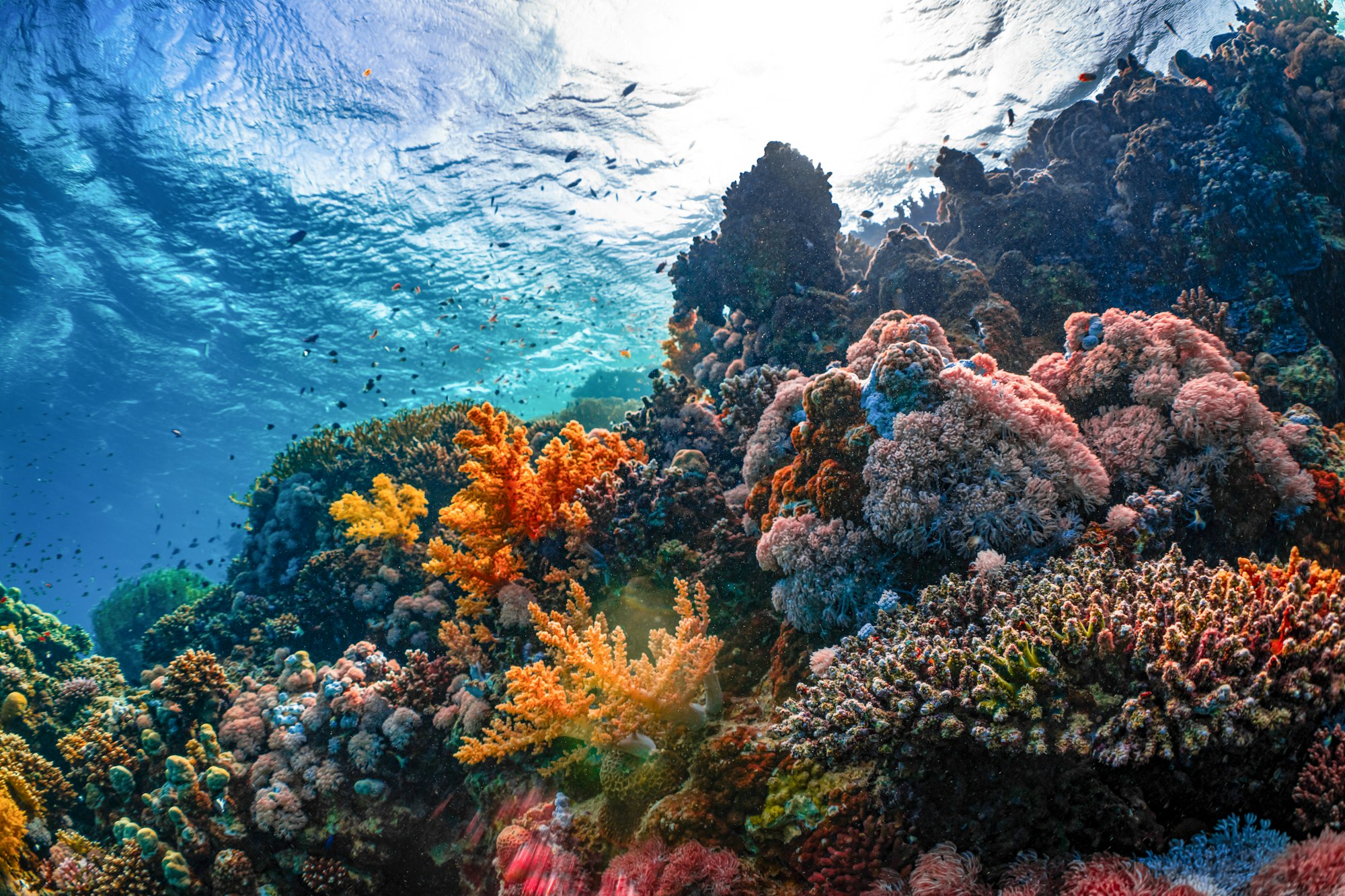
Ellaidhoo House Reef
4.0152°N 72.9498°E · reef
Ellaidhoo House Reef is one of North Ari's most celebrated resort reefs — a wall that rings the entire island for roughly 750 m, dropping from a few metres down into overhangs, caves and cleaning stations, with a small cargo-boat wreck off the jetty. Easy shore entry by day, a favourite night dive by dark.
Overview
Ellaidhoo House Reef wraps the whole of Ellaidhoo island in North Ari Atoll — the island is home to the Cinnamon Ellaidhoo resort, and the reef is regularly named among the best house reefs in the Maldives. Its appeal is unusual: a genuine wall dive you can reach on foot. The reef edge sits just a few metres from the beach, and the wall then runs almost the entire way around the island — commonly cited at around 750 m long — before dropping steeply to roughly 30 m. Several marked entry points (accounts mention five to seven) let you slip in near the dive centre and swim the wall in either direction, which is why it doubles so well as a training site and an easy self-guided dive.
The dive
From the shallow reef top the wall falls away, vertical or overhanging along most of the island except the calmer north side. It’s carved with overhangs, swim-through caverns and cleaning stations, and dressed in sea fans, whip corals and black coral. Down at the deeper end, off the jetty on the south side, lies a small wreck — an old inter-island cargo boat, roughly 30 m long, now settled on the reef as an artificial reef and a favourite target for night dives. Newer or nervous divers can stay shallow near the guide ropes; the deeper wall, the wreck and the current-swept points are where the site rewards experience.
Marine life
The reef holds a real spread of sharks — white-tip, black-tip and grey reef sharks all patrol here, and nurse sharks rest up in the overhangs. Eagle rays and stingrays (cowtail, porcupine and common among them) cruise the drop-off and the lagoon, and turtles are near-daily visitors, especially in the early morning. Add resident Napoleon wrasse, moray eels tucked in the ledges, octopus and cuttlefish, clouds of reef fish and healthy fan-coral gardens, and you have a reef that stays interesting dive after dive.
Conditions & when to go
Visibility and marine life are good across the Maldives dive season (roughly December–April on the northeast monsoon), though a house reef this sheltered stays diveable year-round. Water sits around 27–30 °C. The catch is current: it varies a lot around the island — near-slack at the western point, but strong enough at the exposed points to demand planning. Treat the shallow reef top as beginner- and training-friendly, but the 30 m wall, the wreck and the swept corners as dives for those comfortable with depth and flow. Resorts here typically require a check dive on arrival (and logged experience for unguided 24-hour access). As always, dive within your certification and go with the dive centre when in doubt.
Getting there
Ellaidhoo island sits in North Ari Atoll and is reached by speedboat from Malé (the resort’s own dive centre, Dive & Sail, runs the house reef and around 40-plus boat sites in the area). The reef is right off the beach and jetty, so unlike most Maldives dives no boat is needed to reach it — you walk in.
Sea-surface temperature and wave height from Open-Meteo Marine (ERA5 reanalysis, monthly averages).
106 verified species observations (53 species) logged within ~11 km of this site between 1975 and 2017, from the Ocean Biodiversity Information System.
- Carcharhinus altimus
- Nembrotha cristata
- Chromodoris
- Hypselodoris emma
- Glossodoris hikuerensis
- Goniobranchus geometricus
- Glossodoris cincta
- Pteraeolidia ianthina
- Tenellia melanobrachia
- Halgerda
- Miamira magnifica
- Phyllidia alyta
Scientific survey records skew toward sampled taxa (molluscs, corals) and do not reflect what you are guaranteed to see on a dive.
Source: OBIS (obis.org), aggregated Darwin Core occurrence records.
Conditions change with the tide and the season. If you have dived this site, share what it was actually like — date, visibility, current, and what you saw. Real, recent reports from divers are exactly what this guide is built to collect.
Send a conditions report ›