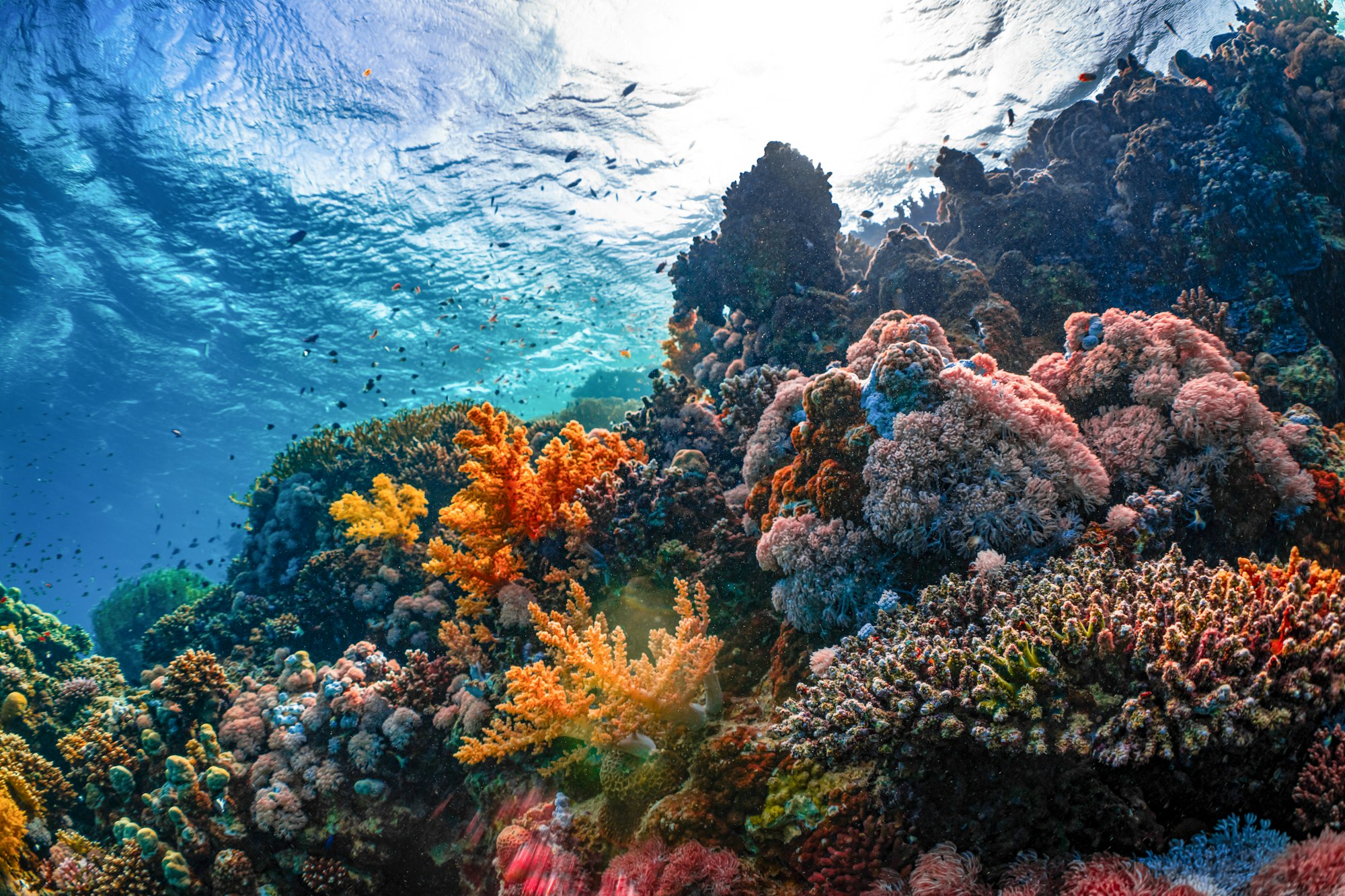
Lobster Rock
5.5501°N 87.0320°W · pinnacle
A sheltered rock pinnacle near Ulloa off Cocos Island's east coast, prized less for walls of hammerheads than for the endemic rosy-lipped batfish, cruising whitetips and rays. Advanced, liveaboard-only, deep in the Eastern Pacific.
Overview
Lobster Rock is a rock outcrop off the eastern side of Cocos Island (Isla del Coco), the remote UNESCO-listed marine national park that sits roughly 550 km (340 mi) off Costa Rica’s Pacific coast and is reachable only by a 36-hour liveaboard crossing from Puntarenas. The site lies immediately beside Ulloa — the two are so close that divers routinely begin at one and drift into the other — and is a short skiff run, about five minutes, from Chatham Bay. Depths run from around 12 m to a maximum near 33–34 m (roughly 40–110 ft).
Why divers come
Cocos earns its reputation on schooling scalloped hammerheads, but Lobster Rock is not that dive. Its draw is different and, in its own way, rarer: it is one of the more reliable places to look for the Cocos rosy-lipped batfish, an odd, endemic bottom-dweller found on a rhodolith plateau a short swim to the north. Sources describe it as a gentler, more sheltered profile than the island’s exposed pinnacles — a dependable alternative when the current at Alcyone is running too hard.
The dive
Divers typically work the base of the rock and the sandy flats and red-algae plateau nearby. The rock itself gathers reef fish; whitetip reef sharks rest and are worked over by cleaner gobies. The rhodolith beds to the north hold the batfish along with flounders, and snake and garden eels standing up out of the sand. In the afternoon and toward dusk, black triggerfish and convict tangs spawn at the base, which is the reason many operators time the dive late in the day.
Marine life
Expect abundant whitetips, marble rays, cottonmouth jacks and surgeonfish, plus the endemic rosy-lipped batfish that is the site’s signature. Nesting triggerfish and eels populate the sand. Bigger animals pass through less predictably: silvertip sharks turn up, and occasionally tiger sharks and manta rays cruise the area. Hammerheads are the property of Cocos’s deeper cleaning stations elsewhere on the island rather than a promised feature here — sources document Lobster Rock as a macro- and reef-focused dive, so treat any pelagic encounter as a bonus, not the plan.
Conditions & who should dive it
Lobster Rock is comparatively protected from the surface conditions that batter the exposed sites, which makes it one of the calmer options in the park. That said, “calmer” at Cocos is relative: the current can still turn swift, and divers may find themselves drifting on ascent, so a surface marker buoy and disciplined buddy contact matter. Water temperatures across the park generally sit in the mid-70s to mid-80s °F (around 24–30 °C), with sharp thermoclines possible. This is Advanced territory. Liveaboards typically require Advanced Open Water certification and a solid logged-dive history; comfort with current, deeper profiles and blue-water ascents is essential.
When to go
The Cocos liveaboard season runs broadly through the year, but the rainy months of roughly June to December bring the nutrient-rich upwelling that concentrates big animals — at the cost of reduced visibility. The drier window tends to offer clearer water. Because only a handful of vessels are licensed, berths are scarce; booking many months, often close to a year, ahead is normal.
Getting there
There is no day-boat, no shore access and no resort — Cocos is liveaboard-only, served principally by operators such as the Undersea Hunter Group and Aggressor fleet out of Puntarenas. Trips are multi-day expeditions and command a premium price for the long open-ocean transit.
A note on protection
Cocos Island National Park has been protected since 1978 and inscribed as a UNESCO World Heritage Site since 1997, with strict park rules, ranger oversight and no fishing inside its waters. Divers should follow all park and operator guidance, keep well off the reef and batfish beds, and take nothing but images.
Sea-surface temperature and wave height from Open-Meteo Marine (ERA5 reanalysis, monthly averages).
196881 verified species observations (57 species) logged within ~11 km of this site between 1932 and 2022, from the Ocean Biodiversity Information System.
- Chordata
- Elagatis bipinnulata
- Mammalia
- Actinopteri
- Lutjanus
- Cephalopholis
- Serranidae
- Kyphosus
- Trachinotus
- Melichthys niger
- Thalassoma lucasanum
- Cephalopholis colonus
Scientific survey records skew toward sampled taxa (molluscs, corals) and do not reflect what you are guaranteed to see on a dive.
Source: OBIS (obis.org), aggregated Darwin Core occurrence records.
Conditions change with the tide and the season. If you have dived this site, share what it was actually like — date, visibility, current, and what you saw. Real, recent reports from divers are exactly what this guide is built to collect.
Send a conditions report ›