Manuelita Inside
5.5611°N 87.0469°W · reef
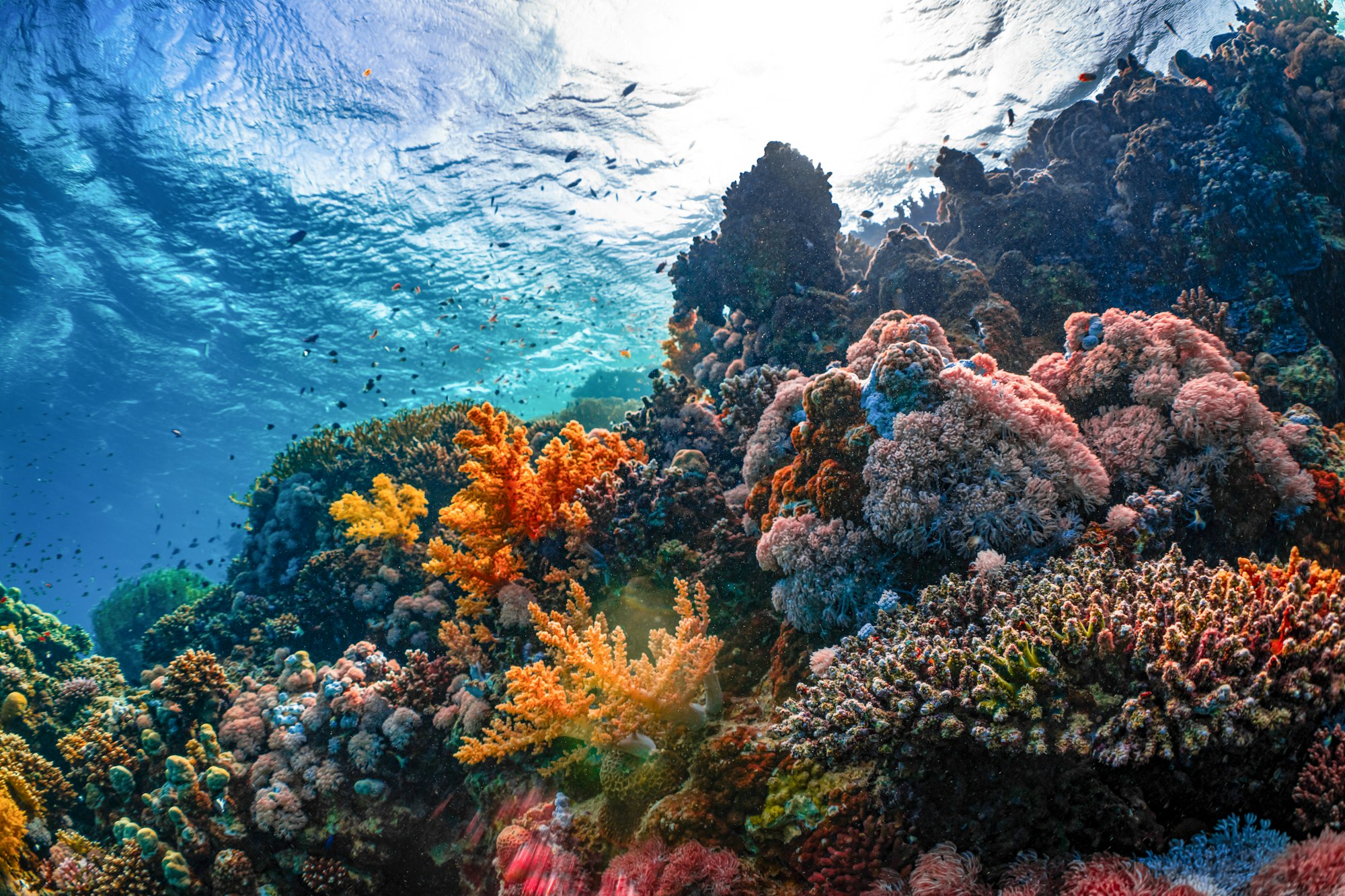
Manuelita Inside is Cocos Island's sheltered coral garden — a calm, shallow reef used as the checkout dive and, historically, the setting for the legendary night dive where whitetip reef sharks hunt en masse across the reef.
Overview
Manuelita Inside — also called Manuelita Garden or the Manuelita Coral Garden — sits on the sheltered east side of Manuelita islet, the small rock off the northern tip of Cocos Island (Isla del Coco), a UNESCO World Heritage national park roughly 550 km off the Pacific coast of Costa Rica and reachable only by liveaboard. Where most of Cocos is exposed volcanic pinnacle battered by current, Manuelita Inside faces calm water and holds one of the island’s only true hard-coral gardens. The reef flat slopes gently from around 6 metres to about 22 metres over sand, with little current or swell.
Why divers come
It is the gentle counterpoint to Cocos’s adrenaline. Liveaboards typically drop here first, using the calm, shallow garden as a checkout dive to sort weighting and buoyancy before tackling the outer sites. But the site earned its fame after dark: Manuelita was, for years, the setting for one of the most extraordinary night dives in the world, where whitetip reef sharks — resting by day — swarm across the reef in tangles of fins and tails, using divers’ torch beams to corner prey.
The dive (incl. the night dive)
By day, Manuelita Inside is relaxed and photographer-friendly: work the coral heads and the adjacent sand slope for reef fish, eels, lobsters and cruising rays, keeping a comfortable multi-level profile in the shallows. The historic night dive drew hundreds of hunting whitetips into a genuine feeding frenzy — thrilling but never casual. Divers should know that night dives at Cocos have been suspended by operators since a fatal tiger shark attack at Manuelita in November 2017, and current itineraries do not offer them. Treat any night-diving described in older accounts as history, not a booking option, and confirm what your specific liveaboard runs today.
Marine life
Even by day the shark count is high: whitetip and blacktip reef sharks patrol the garden, joined by marble rays, eagle rays, seasonal mantas and green turtles. The coral holds blue-striped snappers, soldierfish, yellow goatfish, morays and spiny lobsters, with garden eels swaying over the sand. Hammerheads pass nearby cleaning stations, and tiger sharks are occasional — sometimes bold — visitors.
Conditions & who should dive it
The site itself is easy: warm water, good visibility and minimal current make it the friendliest dive at Cocos. The honest framing is that Cocos as a destination is an advanced, remote, big-animal trip — the outer sites demand comfort with current, and the presence of large sharks (including tigers) calls for disciplined, guided diving throughout. Advanced Open Water certification and solid experience are the norm; expect to dive in guided groups, follow surface-interval and pickup protocols closely, and heed briefings on shark behaviour.
When to go
Cocos is diveable year-round. The wetter June–November window brings warmer, often greener water and the best odds for schooling hammerheads and passing whale sharks; the drier December–May season tends to bring clearer water and calmer crossings. Manuelita Inside stays reliably sheltered across both seasons.
Getting there
There is no accommodation on the island and no day access — Cocos is liveaboard-only. Boats depart from Puntarenas on Costa Rica’s Pacific coast, and the open-ocean crossing takes roughly 30–36 hours each way, so trips run 8–10 days to make the distance worthwhile.
A note on protection
Cocos Island National Park is a strictly protected UNESCO World Heritage Site and a cornerstone of Eastern Pacific shark conservation. Park rules govern where and how you dive, no fishing or collecting is permitted, and dive practices — including the suspension of night dives — have been tightened in the interest of both diver and animal safety. Follow ranger and guide instructions without exception.
Sea-surface temperature and wave height from Open-Meteo Marine (ERA5 reanalysis, monthly averages).
196893 verified species observations (58 species) logged within ~11 km of this site between 1932 and 2022, from the Ocean Biodiversity Information System.
- Chordata
- Elagatis bipinnulata
- Mammalia
- Actinopteri
- Lutjanus
- Cephalopholis
- Serranidae
- Kyphosus
- Trachinotus
- Melichthys niger
- Thalassoma lucasanum
- Cephalopholis colonus
Scientific survey records skew toward sampled taxa (molluscs, corals) and do not reflect what you are guaranteed to see on a dive.
Source: OBIS (obis.org), aggregated Darwin Core occurrence records.
Conditions change with the tide and the season. If you have dived this site, share what it was actually like — date, visibility, current, and what you saw. Real, recent reports from divers are exactly what this guide is built to collect.
Send a conditions report ›