Viking Rock
5.5501°N 87.0647°W · reef
A shallow rocky reef at the northern edge of Wafer Bay, Viking Rock pairs easy macro life with a sloping flank that draws schooling hammerheads and the occasional tiger shark — an advanced, liveaboard-only Cocos dive.
Overview
Viking Rock is a small rock outcrop marking the northern limit of Wafer Bay, on the sheltered northwest side of Cocos Island. Compared with the marquee seamounts, it is a gentler, shallower site — most of the action sits between roughly 10 and 20 metres, and it is often scheduled as a day’s third dive. The reef is a submerged, staircase-like slope of ledges and boulders that shelters an unusually varied cast of residents, while its deeper flank opens onto the blue water that Cocos is famous for.
Why divers come
Cocos rewards patience, and Viking Rock offers two experiences in one. The shallows are a genuine macro and reef playground; the seaward-facing slope is where divers keep an eye on the open water, since passing schools of scalloped hammerheads and, less predictably, tiger sharks are reported here. It is a good site to slow down, work the ledges, and still stay alert to the big pelagics cruising past.
The dive
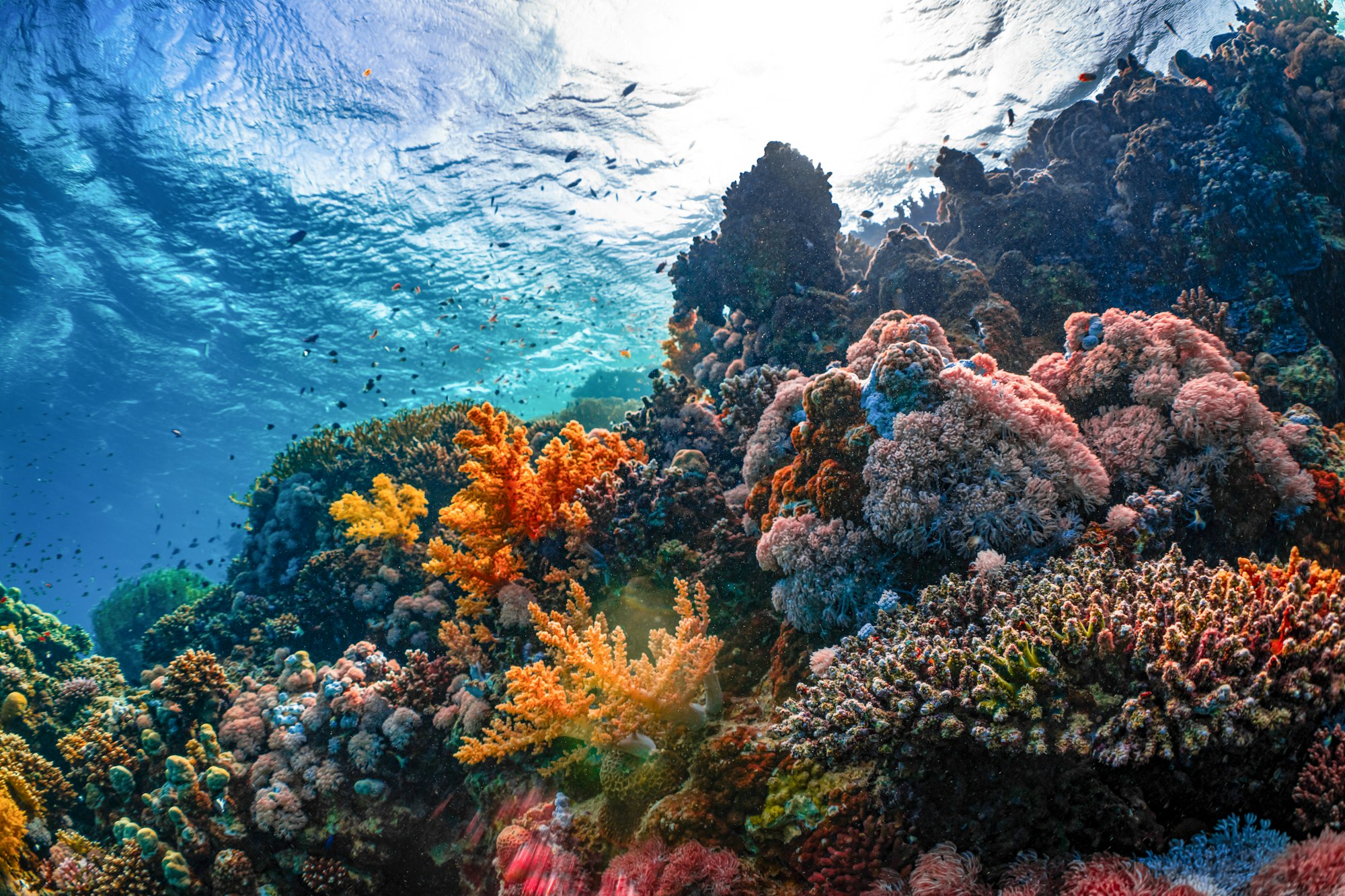
Divers typically drop onto the reef and work the staircase of ledges and boulders, which create endless nooks for smaller life. The recommended sweet spot is the shallower zone, roughly 10–20 metres, though the reef structure continues deeper. Rather than a single dramatic wall or pinnacle, the appeal is the texture — habitats stacked on habitats — combined with the chance to glance out over the drop-off toward the slope where sharks tend to appear.
Marine life
The reef itself hides moray eels, lobsters and octopus among its ledges, patrolled by whitetip reef sharks and marble rays over the sand and rock. Schooling fish gather in the shallows, and the site is well regarded for macro photography. On the deeper slope, schooling scalloped hammerheads are the headline draw, with tiger sharks an occasional visitor; seasonal whale sharks are possible across Cocos but should be treated as a bonus, not an expectation. As always at Cocos, sightings vary dive to dive.
Conditions & who should dive it
This is Cocos, so this is an advanced site regardless of its modest depths. Currents around the island are strong and changeable, thermoclines can drop water temperature sharply, and surge is common near shallow rock. Operators require Advanced Open Water certification and meaningful logged experience (commonly 50+ dives); comfort with negative entries, currents and blue-water awareness matters. Viking Rock’s shallower profile makes it a slightly more forgiving stop within a demanding schedule, not a beginner dive.
When to go
Cocos is diveable year-round by liveaboard. The wetter months of roughly June through November bring greener water and stronger currents but the best odds for big schooling hammerhead action, with August–September often cited as peak. The drier season (around December–May) generally offers better visibility and calmer surface crossings, with steadier whitetip and ray activity. Whale shark chances are seasonal and never guaranteed.
Getting there
There is no way to dive Cocos on a day trip. The island lies roughly 550 km off Costa Rica’s Pacific coast, and access is by liveaboard only. Boats depart from Puntarenas for a crossing of around 36 hours each way, so trips run about 8–11 days to make the journey worthwhile. Expeditions are a significant investment and book out well ahead.
A note on protection
Cocos Island is a Costa Rican National Park and a UNESCO World Heritage Site, protected for exactly the shark and pelagic life that makes sites like Viking Rock special. Diving is regulated, landing on the island is restricted, and the surrounding waters form part of a marine reserve. Divers should follow all park and operator rules, keep well clear of cleaning stations and wildlife, and take nothing but photos.
Sea-surface temperature and wave height from Open-Meteo Marine (ERA5 reanalysis, monthly averages).
196854 verified species observations (58 species) logged within ~11 km of this site between 1932 and 2022, from the Ocean Biodiversity Information System.
- Chordata
- Elagatis bipinnulata
- Mammalia
- Actinopteri
- Lutjanus
- Cephalopholis
- Serranidae
- Kyphosus
- Trachinotus
- Melichthys niger
- Thalassoma lucasanum
- Cephalopholis colonus
Scientific survey records skew toward sampled taxa (molluscs, corals) and do not reflect what you are guaranteed to see on a dive.
Source: OBIS (obis.org), aggregated Darwin Core occurrence records.
Conditions change with the tide and the season. If you have dived this site, share what it was actually like — date, visibility, current, and what you saw. Real, recent reports from divers are exactly what this guide is built to collect.
Send a conditions report ›