O'Neal Rock
18.7917°N 110.9417°W · pinnacle
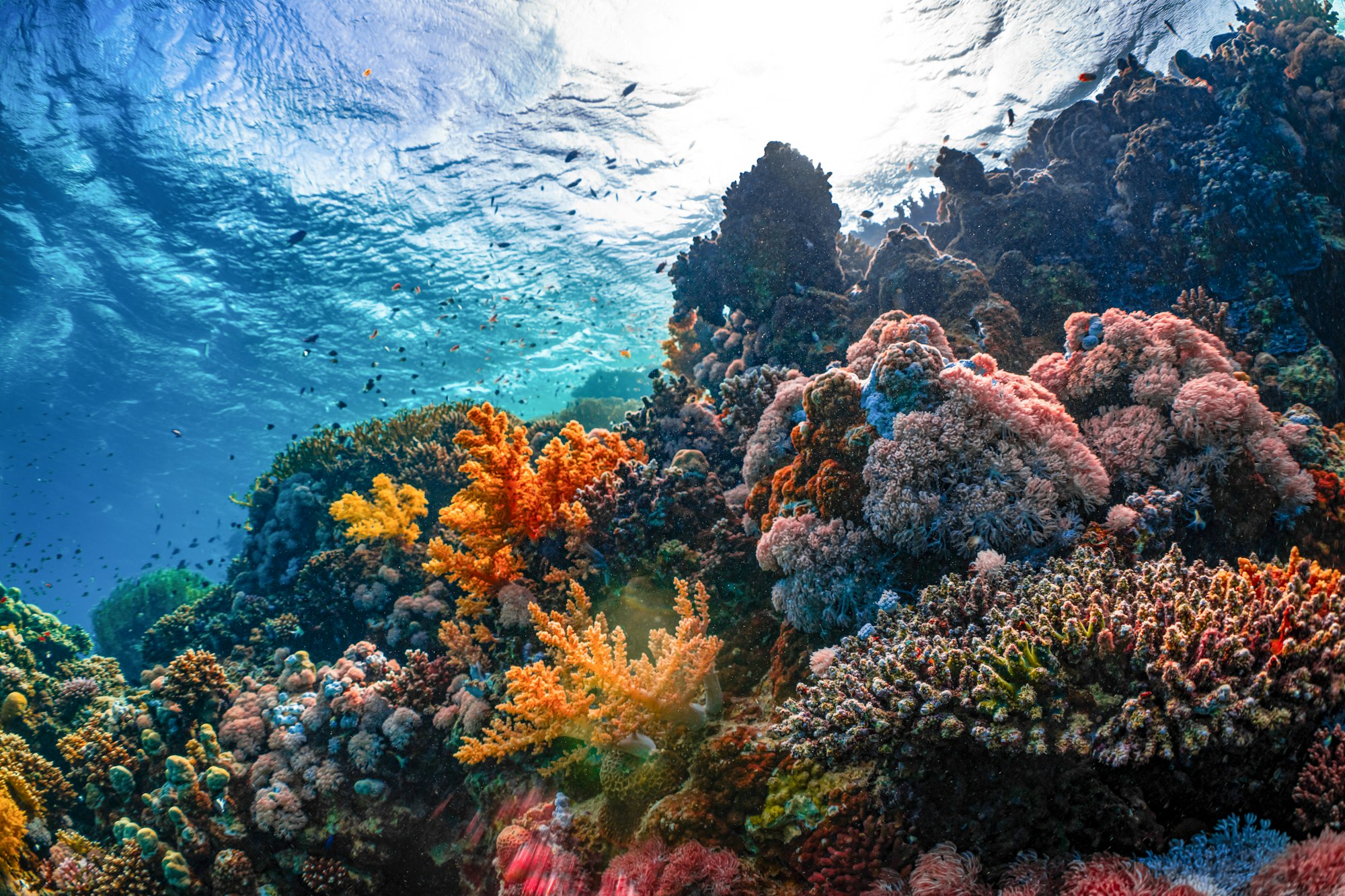
A current-swept pinnacle off the north side of Socorro Island, nicknamed 'Hammerhead Central' by operators for its scalloped hammerhead schools. A shallow plateau, a photogenic cavern and open-blue exposure make it an advanced, liveaboard-only dive.
Overview
O’Neal Rock — Roca O’Neal on Mexican charts — is a rock pinnacle lying off Socorro Island, the largest of the four volcanic islands that make up the Revillagigedo Archipelago in the eastern Pacific. It appears on the standard Socorro liveaboard rotation alongside El Cañón, The Boiler, Roca Partida, Cabo Pearce and Punta Tosca, and is one of a small handful of sites regularly dived on Socorro itself.
A word of honesty up front: O’Neal Rock is thinly documented compared with The Boiler or Roca Partida. Operators describe it consistently but briefly, and no published survey of its topography exists in the sources we could verify. What follows sticks to what multiple operators and dive-travel guides agree on, with archipelago-wide context clearly labelled as such.
Why divers come
One reason, repeated across sources: hammerheads. Several operators and guides nickname the site “Hammerhead Central,” and Dive The World’s seasonal guide singles out Roca O’Neal as the archipelago’s most reliable spot for schooling scalloped hammerheads weaving through the current. This is not a manta cleaning station in the mould of The Boiler — divers come for sharks in blue water and for the odd chance of whatever else the open Pacific delivers.
The dive
Diveplanit describes the site simply as “a pinnacle with a plateau at about 10 m,” and that plateau is the heart of the dive. Guides typically position divers on it — Dive The World puts it at roughly 10–12 m — to watch the current line and the blue beyond it. A rocky slope drops away from the plateau, and there is a cavern that both sources note as photogenic, an unusual feature in an archipelago otherwise short on dramatic geology.
No operator publishes a definitive maximum depth for O’Neal Rock. Socorro sites generally run in the 10–30 m band, and dives here are best planned conservatively within recreational limits rather than to a number.
Marine life
Scalloped hammerheads are the headline. Beyond them, sources list Galapagos, grey reef and silky sharks in the current, with lobster and smaller reef life on the plateau shallows. Archipelago-wide, giant oceanic mantas, bottlenose dolphins and humpback whales are all possible on a Socorro trip; whether they show at this particular rock on a given day is luck, not schedule. IUCN’s World Heritage assessment records 539 fish species for the archipelago, 13 of them found nowhere else.
Conditions & who should dive it
Advanced. Socorro diving in general means current, open-ocean exposure, blue-water drifts and small-boat pickups far from any hospital; O’Neal Rock’s draw is precisely the current the sharks ride. Good buoyancy, comfort in surge and swell, an SMB and disciplined gas management are the working minimum. Operators typically expect logged experience and advanced certification. Visibility is often 30–35 m but can fall to 15–20 m during plankton blooms. Water sits around 21–23 °C in winter and 23–26 °C later in the season — a 5 mm suit or thicker is standard, and many divers go warmer.
When to go
The Revillagigedo dive season runs roughly November through May, with some operators extending into June; the park effectively closes over the summer. Sources vary on the best window: humpbacks are most likely late January to early April, while several guides point to the later spring months for the largest hammerhead schools and warmer water.
Getting there
Liveaboard only — there is no shore access and no land-based diving. Boats depart Cabo San Lucas or San José del Cabo for a crossing of roughly 24–28 hours each way, covering somewhere near 400 km (operator-quoted distances vary between about 235 and 300 miles). Trips typically run 8–10 days with five to six diving days split across San Benedicto, Socorro and Roca Partida.
A note on protection
The archipelago was inscribed as a UNESCO World Heritage site in 2016 and declared a national park in 2017, covering roughly 14.8 million hectares almost entirely marine, with fishing banned throughout. Access is limited to permit-holding vessels, park fees are charged per diver per day, and park rules prohibit night dives, knives and dive lights. Divers should expect these rules to be enforced and should confirm current fees with their operator, as they change.
Sea-surface temperature and wave height from Open-Meteo Marine (ERA5 reanalysis, monthly averages).
4257 verified species observations (126 species) logged within ~11 km of this site between 1897 and 2018, from the Ocean Biodiversity Information System.
- Megaptera novaeangliae · Humpback whale
- Entomacrodus chiostictus
- Myripristis clarionensis
- Kuhlia mugil
- Ophioblennius atlanticus
- Apogon atricaudus
- Mugil curema
- Bodianus diplotaenia
- Xanthichthys mento
- Atherinella eriarcha
- Thalassoma lucasanum
- Paranthias furcifer
Scientific survey records skew toward sampled taxa (molluscs, corals) and do not reflect what you are guaranteed to see on a dive.
Source: OBIS (obis.org), aggregated Darwin Core occurrence records.
Conditions change with the tide and the season. If you have dived this site, share what it was actually like — date, visibility, current, and what you saw. Real, recent reports from divers are exactly what this guide is built to collect.
Send a conditions report ›